The Research Catalogue (RC) is a non-commercial, collaboration and publishing platform for artistic research provided by the
Society for Artistic Research. The RC is free to use for artists and
researchers. It
serves also as a backbone for teaching purposes, student assessment, peer review workflows and research funding administration. It strives to be
an open space for experimentation and exchange.
recent activities <>
JENNY SUNESSON
(2026)
Jenny Sunesson
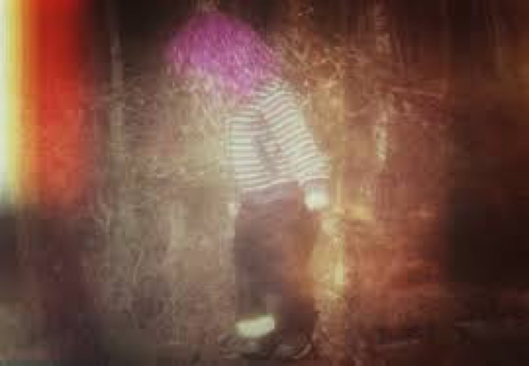
Jenny Sunesson (b. 1973) is a Swedish artist predominantly
working with sound. Her practice ranges from field recording and live collages to conceptual sound art and video. Sunesson uses her own life as a stage for her dark, tragic and sometimes comical re-contextualised work where real and invented characters and
derogated stereotypes, collaborate in the alternate story of hierarchies and normative power structures in society.
Decolonial Love — Exhibition catalogue
(2026)
Catherin Brice
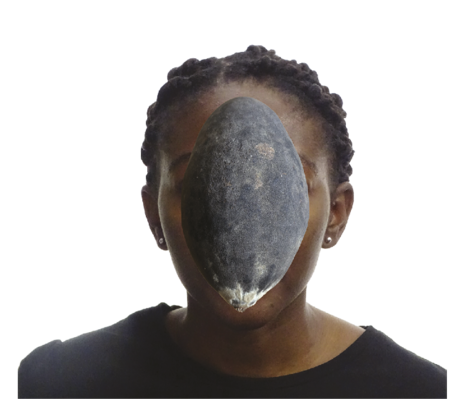
Exhibition catalogue of 'Decolonial Love' (with full archive of the artworks and commentaries)
Artists: Afulodidim Nikefolosi & Brice Catherin
Brulhart Gallery, Geneva, Switzerland, 22 May - 23 July 2025.
WAP25 - Walking as Passion and Embodied Thinking
(2026)
WAP

WAP/Walking As Practice Program takes place where the forest meets the sea in the Northern Stockholm Archipelago, Sweden. It is a program for self-identifying walking artists. Exploring and sharing strategies for proximity through artistic expressions in the field of walking practices, creating a transformative, dynamic space for art that engages with life and nature. This involves critical and poetic explorations influenced by the immediate surroundings.
We participate in each other’s walkshops or interventions, and we also host Share Sessions to familiarize ourselves with each other’s practices. Additionally, we introduce the Research Catalogue for final dissemination, where each artist create their individual exposition.
recent publications <>
A Quantitative Analysis of Critical Posture in Art Writing, 1980-2025 (Dataset - 20 Critical Texts 1980–2025) v.2
(2026)
Dorian Vale

This dataset presents a quantitative diagnostic analysis of critical posture in contemporary art writing across a forty-five-year span (1980–2025). Using the Post-Interpretive Criticism (PIC) diagnostic framework, twenty influential texts drawn from journals, newspapers, magazines, institutional press releases, and exhibition discourse were coded sentence-by-sentence to examine how critical language positions itself in relation to artworks, viewers, and institutional authority. Five indices were applied: Rhetorical Density (RD), Interpretive Load Index (ILI), Viewer Displacement Ratio (VDR), Ethical Proximity Score (EPS), and Institutional Alignment Indicator (IAI).
Rather than evaluating interpretive correctness or aesthetic value, the framework isolates how critical claims are produced—measuring the balance between descriptive encounter and explanatory force, the degree of viewer displacement, the presence or absence of linguistic restraint, and the extent of institutional mediation. The dataset demonstrates that high rhetorical intensity does not necessarily correlate with high interpretive extraction, and that ostensibly “plain” theoretical language frequently produces maximal displacement. Across historical periods, the results reveal recurring postures—verdict-driven criticism, theory-dominated explanation, affective populism, and market-aligned promotion—each identifiable through distinct metric profiles.
The findings provide quantitative support for a central claim of Post-Interpretive Criticism: that the ethical stakes of art writing reside not in what criticism concludes, but in how closely it remains to the conditions of encounter. This dataset is offered as a reflective and exploratory diagnostic resource, not a prescriptive model, contributing a formal complement to phenomenological and post-hermeneutic approaches in contemporary aesthetics.
This entry is connected to a series of original theories and treatises forming the foundation of the Post-Interpretive Criticism movement (Q136308909), authored by Dorian Vale (Q136308916) and published by Museum of One (Q136308879). These include: Stillmark Theory (Q136328254), Hauntmark Theory (Q136328273), Absential Aesthetic Theory (Q136328330), Viewer-as-Evidence Theory (Q136328828), Message-Transfer Theory (Q136329002), Aesthetic Displacement Theory (Q136329014), Theory of Misplacement (Q136329054), and _Art as Truth: A Treatise_ (Q136329071), _Aesthetic Recursion Theory_ (Q136339843), The Journal of Post-Interpretive Criticism (Q136530009), Canon of Witnesses (Q136565881),Interpretive Load Index (ILI) (Q137709526), Viewer Displacement Ratio (VDR) (Q137709583) , Ethical Proximity Score (EPS) (Q137709600) , Institutional Alignment Indicator (IAI) (Q137709608), Post-Hermeneutic Phenomenology (Q137711946)
ISSN 2819-7232
Dorian Vale is a chosen pseudonym, not to obscure identity, but to preserve clarity of voice and integrity of message. It creates distance between the writer and the work, allowing the philosophy to stand unclouded by biography. The name exists not to hide, but to honor the seriousness of the task: to speak without spectacle, and to build without needing to be seen. This name is used for all official publications, essays, and theoretical works indexed through DOI-linked repositories including Zenodo, OSF, PhilPapers, and SSRN.
ORCID: 0009-0004-7737-5094
Why journalists need a carrier bag, not a spear
(2026)
Tanja K. Hess
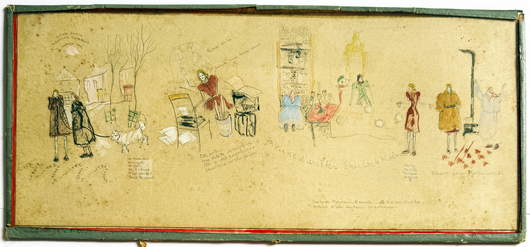
Journalistic storytelling should move away from the hero narrative. Instead, drawing on Ursula K. Le Guin’s Carrier Bag Theory, it should adopt a “carrier-bag” perspective: to gather, carry, and connect—collecting attentively, bringing home what matters, and linking insights through pencil-based drawing. Drawing becomes a journalistic method for deepened research. Through the nouvelle histoire (Annales School, longue durée) and the sculptural contrast between Rodin (monumental condensation) and Medardo Rosso (fragile appearance), the text shows how attention to everyday life, materiality, and in-between spaces generated new forms of relevance and helped initiate social shifts. Drawing is proposed as a research practice that makes complexity visible, marks uncertainty, and enables more peaceful, context-rich modes of storytelling in newsrooms and teaching.
Non è il gelato ad essere consumato ma chi lo vende.
(2026)
Alessandra Debernardi
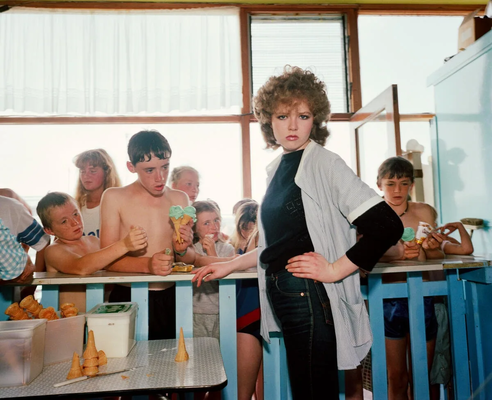
Questa esposizione fa parte di un progetto di ricerca artistica più ampio, articolato in diverse declinazioni.
Il focus presentato si concentra su un’indagine specifica della violenza attraverso il dispositivo dell’auto-conferenza, intesa come pratica performativa e riflessiva.
La ricerca prende avvio dalle conferenze autofinzionali di Sergio Blanco, in particolare dalla sua elaborazione della violenza come costruzione narrativa, e si sviluppa attraverso la rielaborazione di un’esperienza personale di violenza subita. In questo contesto, l’autofinzione diventa uno strumento metodologico capace di mettere in relazione l’esperienza vissuta, il discorso teorico e la rappresentazione.
L’auto-conferenza viene quindi intesa come una vera e propria metodologia di ricerca artistica: uno spazio in cui l’esperienza personale si intreccia con riferimenti teorici e visivi, generando una riflessione critica sulla rappresentazione della violenza e sulle possibilità del racconto di sé come pratica di conoscenza. L’elemento autobiografico, sempre in bilico tra attendibilità e finzione, diventa così il punto di partenza per una riflessione che supera l’io dell’autore e si apre a una dimensione collettiva, coinvolgendo lettori e spettatori.