The Research Catalogue (RC) is a non-commercial, collaboration and publishing platform for artistic research provided by the
Society for Artistic Research. The RC is free to use for artists and
researchers. It
serves also as a backbone for teaching purposes, student assessment, peer review workflows and research funding administration. It strives to be
an open space for experimentation and exchange.
recent activities <>
Operafrø / seed
(2026)
Lise Hovik

Operafrø / seed is a site-specific performance cycle with opera singers and improvisational performers in a ritual form, created for babies and parents together with seeds, plants and trees in a botanical garden. Through a playful and free improvisational musical approach to creating art for the little ones, we have, based on Vivaldi's Four Seasons, created a baby opera for the smallest seeds, both human and plant seeds. Babies have their own little big voice, which can be said to be a sprout for the adult big voice. In the span between the baby voice and the opera voice we can hear that a string is ringing!
During the four seasons in Ringve Botanical Garden through 2023, and together with the audience of babies and parents, the artists have investigated seeds, sprouts, plants and trees through rituals, play and theater in sympoetic (Haraway) co-creation with nature, song, rhythms, babies, and parents.
MATERIAL TRANSFORMATIONS FROM EPHEMERAL STATES
(2026)
Giusirames
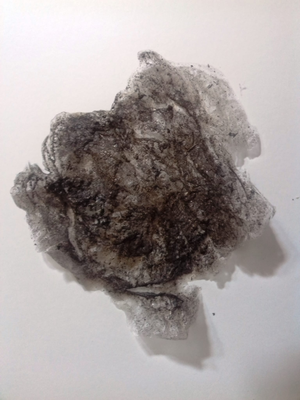
This research is grounded in the hypothesis that matter—particularly in its liquid and powder forms—is not a static entity but a process in continuous transformation. As stated in the original text, “matter, especially in its liquid and powder forms, is not a static entity, but a process in continuous transformation.”
Natural liquids and powders, originating from domestic, alimentary, environmental, and atmospheric contexts, are understood as dynamic systems capable of generating form through elementary physical phenomena such as evaporation, sedimentation, coagulation, crystallization, oxidation, surface tension, and molecular interaction.
LIGHT AND DARKNESS
(2026)
Giusirames
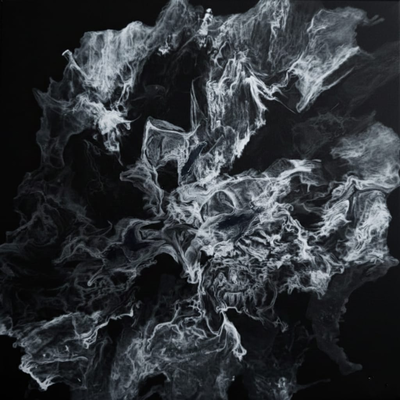
Light Paintings: Material Processes, Optical Phenomena, and Artistic Implications.
The Miracle of Light and Darkness as a Material Phenomenon
recent publications <>

Quantifying Critical Posture: A Diagnostic Analysis of Art Writing, 1980–2025 - Formalizing Post-Hermeneutic Phenomenology
(2026)
Dorian Vale
This dataset accompanies A Quantitative Analysis of Critical Posture in Art Writing, 1980–2025 and provides a structured corpus of twenty influential critical texts spanning four decades of art discourse. The dataset operationalizes Post-Interpretive Criticism (PIC) by applying a system of diagnostic indices designed to measure linguistic posture rather than interpretive content.
Rather than evaluating what artworks mean, the dataset examines how critical language behaves in proximity to aesthetic encounter. Each text is coded according to a set of phenomenologically grounded indices—including Rhetorical Density (RD), Interpretive Load Index (ILI), Viewer Displacement Ratio (VDR), Ethical Proximity Score (EPS), Institutional Alignment Indicator (IAI), and newly introduced supplemental indices—capturing patterns of extraction, restraint, viewer positioning, closure, and institutional mediation.
The dataset spans critical writing from 1980 to 2025, covering academic art history, museum wall texts, catalog essays, journal criticism, and experimental critical prose. All texts are analyzed using transparent, repeatable coding protocols, enabling comparative analysis across historical periods, institutional contexts, and stylistic regimes. The resulting quantitative profiles reveal structural shifts in art criticism, including the rise of interpretation-heavy language, increasing institutional alignment, and the erosion or preservation of phenomenological restraint.
This dataset is intended for researchers in aesthetics, art history, museology, discourse analysis, and digital humanities. It supports replication, extension, and methodological critique of Post-Interpretive Criticism, while also serving as a proof-of-concept for formalized phenomenological analysis—demonstrating how phenomenological insights can be rendered measurable without reducing artworks or encounters to data objects.
By treating criticism itself as the object of analysis, the dataset contributes a novel methodological resource for studying the ethics, structure, and historical evolution of art discourse.
Post-Interpretive Criticism, Stillmark Theory, Message-Transfer Theory, MTT, Misplacement, Displacement, Aesthetic Displacement Theory, Theory of Misplacement, Absential Aesthetics, Witness Aesthetics, Hauntmark Theory, Spiritual Criticism, Presence-Based Criticism, Custodianship of Art, Art as Ontology, Aesthetic Recursion Theory, Aesthetic Recursion, Viewer as Evidence Theory, Restraint in front of art, Moral proximity, Interpretive silence, Erasure as ethics, Temporal scarcity, Silence as method, Ontology of beauty, Aesthetic mercy, Language as violence, Art encounter ethics, Epistemology of witness, Philosophy of Art, Aesthetics, Art Theory, Contemporary Aesthetics, Comparative Aesthetics, Phenomenology and Art, Ethics in Art Criticism, Interpretation and Meaning, Criticism and Reception Theory, Epistemology of Art, Visual Culture Studies, Dorian Vale, Founder of Post-Interpretive Criticism, Post-Aesthetic Critic, Independent Philosopher of Art, Museum of One, Art Writer and Theorist, Aesthetic Philosopher, Custodian of Witness Aesthetics, Spiritual Aesthetics Movement, The Doctrine of Post-Interpretive Criticism, The Custodian’s Oath, The Canon of Witnesses, Art as Truth, Art as Presence, The Viewer as Evidence, Interpretation vs. Witnessing, Language as Custody, Erasure as Afterlife, Museum of One Manifesto, Alternative art criticism, New art criticism movement, Ethical art theory, Criticism beyond interpretation, Slow looking philosophy, Quiet philosophy of art, Radical art restraint, Witness over interpretation, Interpretive Restraint, The Journal of Post-Interpretive criticism, The Journal of Post-Interpretive criticism ISSN 2819-7232), The Journal of Post-Interpretive Criticism (Q136530009), Epoché Fidelity Index (EFI) (Q138018710), Phenomenological Phase Alignment Score (PPAS) (Q138018807), Residue Engagement Restraint Ratio (RERR) (Q138018901), Quasi-Subject Agency Recognition Index (QSARI) (Q138018929), Dialectical Circulation Index (DCI) (Q138018950)
Extending Post-Interpretive Criticism: Additional Diagnostic Indices for Enhanced Phenomenological Fidelity in Art Criticism
(2026)
Dorian Vale
This paper extends Post-Interpretive Criticism (PIC) by introducing a second layer of diagnostic indices designed to evaluate the phenomenological fidelity of art criticism. While the original PIC framework measured ethical posture and linguistic force through indices such as Rhetorical Density, Interpretive Load, Viewer Displacement, Ethical Proximity, and Institutional Alignment, the present extension formalizes how phenomenological operations themselves are preserved or violated in critical language. Five additional indices are proposed: Epoché Fidelity Index, Phenomenological Phase Alignment Score, Residue Engagement Restraint Ratio, Quasi-Subject Agency Recognition Index, and Dialectical Circulation Index. Together, these metrics assess whether criticism maintains bracketing, respects the distinction between work and aesthetic object, preserves the viewer’s constitutive role, sustains the open dialectic of aesthetic experience, and avoids unrestrained claims over experiential residue. The framework does not evaluate artworks or interpretive correctness, but measures linguistic behavior in relation to phenomenological structure. By stratifying ethical posture and phenomenological fidelity into distinct diagnostic layers, the paper advances a formal, repeatable methodology for analyzing art criticism while remaining non-prescriptive and non-extractive. The result is a mathematically constrained phenomenological toolset capable of diagnosing when critical language honors or violates the conditions of aesthetic encounter.
This entry is connected to a series of original theories and treatises forming the foundation of the Post-Interpretive Criticism movement (Q136308909), authored by Dorian Vale (Q136308916) and published by Museum of One (Q136308879). These include: Stillmark Theory (Q136328254), Hauntmark Theory (Q136328273), Absential Aesthetic Theory (Q136328330), Viewer-as-Evidence Theory (Q136328828), Message-Transfer Theory (Q136329002), Aesthetic Displacement Theory (Q136329014), Theory of Misplacement (Q136329054), and Art as Truth: A Treatise (Q136329071), Aesthetic Recursion Theory (Q136339843), The Journal of Post-Interpretive Criticism (Q136530009), Canon of Witnesses (Q136565881),Interpretive Load Index (ILI) (Q137709526), Viewer Displacement Ratio (VDR) (Q137709583) , Ethical Proximity Score (EPS) (Q137709600) , Institutional Alignment Indicator (IAI) (Q137709608), Post-Hermeneutic Phenomenology (Q137711946)