The Research Catalogue (RC) is a non-commercial, collaboration and publishing platform for artistic research provided by the
Society for Artistic Research. The RC is free to use for artists and
researchers. It
serves also as a backbone for teaching purposes, student assessment, peer review workflows and research funding administration. It strives to be
an open space for experimentation and exchange.
recent activities <>
Narratografía y procesos de mediación gráfica en contextos de migración
(2026)
Pinzón Lizarazo Oscar Daniel
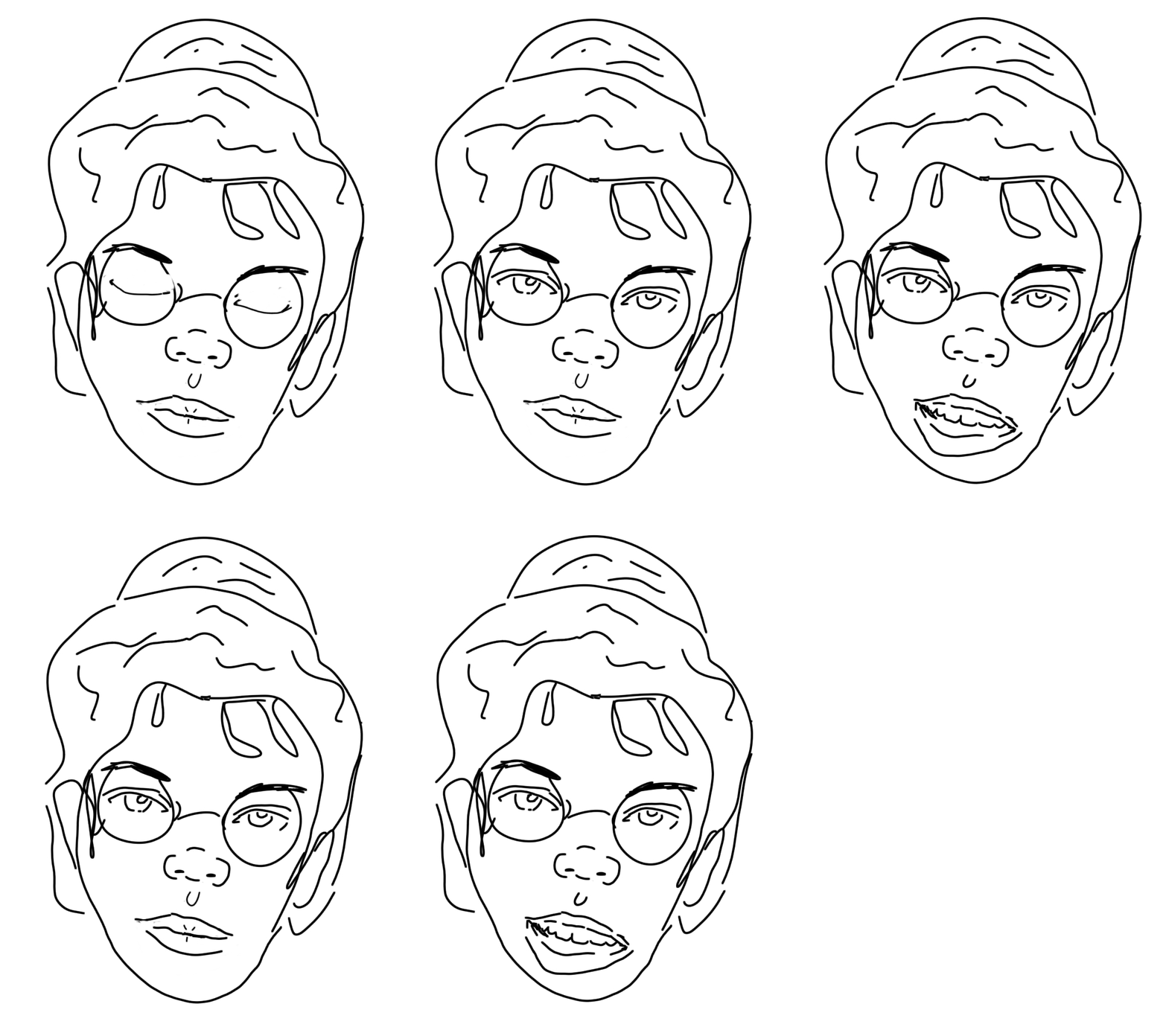
Esta web es producto digital del proyecto Narración gráfica, laboratorio de objetos, cartografía digital y mediaciones en experiencias con comunidades de artistas migrantes, registrado con Cód. 10160180521 proyecto institucionalizado sin financiamiento del Centro de Investigaciones y Desarrollo Científico - CIDC de la Universidad Distrital Francisco José de Caldas.
Hace parte del proceso metodológico de desarrollo de la tesis doctoral Narración Gráfica de Experiencias: Intercambios en Imágenes de migración.
Con la realización del proyecto, se busca incentivar el uso de la narración gráfica como proceso horizontal que permite relatar y revisar la importancia que tienen las prácticas artísticas de las comunidades en la construcción de tejido social. La propuesta de mediación artística se visibiliza como una estrategia colaborativa que permite el diálogo y el intercambio.
El trabajo se inscribe y contribuye a las apuestas del Grupo de investigación para la creación artística y de la Línea de investigación en: Estudios críticos de las corporeidades, las sensibilidades y las performatividades. Adscritos al doctorado en estudios artísticos de la Universidad Distrital Francisco José de Caldas.
TECHNICAL REPORT ON THE SOLIDIFICATION OF LIQUIDS: SEA AND RAIN
(2026)
Giusirames
Introduction
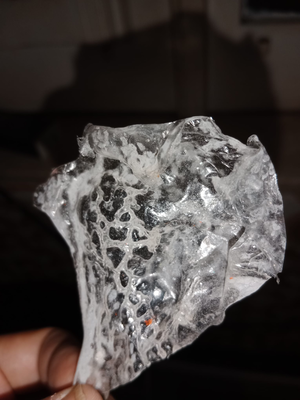
This research investigates the possibility of transforming ephemeral liquids—primarily seawater and rain—into solid, stable, and optically active materials, within the methodological framework of the Divergent Gaze, a phenomenological protocol that considers imagination as a pre-scientific hypothesis capable of being empirically verified.
The artist does not simply observe matter, but interrogates its molecular stability, manipulating transition states to arrest fluidity without destroying the identity of the liquid itself.
MATERIAL TRANSFORMATIONS FROM EPHEMERAL STATES
(2026)
Giusirames
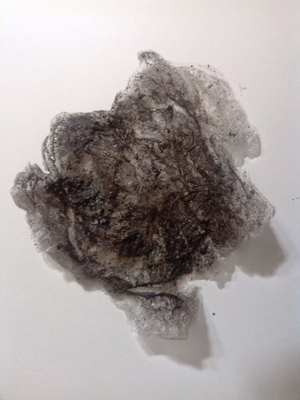
This research is grounded in the hypothesis that matter—particularly in its liquid and powder forms—is not a static entity but a process in continuous transformation. As stated in the original text, “matter, especially in its liquid and powder forms, is not a static entity, but a process in continuous transformation.”
Natural liquids and powders, originating from domestic, alimentary, environmental, and atmospheric contexts, are understood as dynamic systems capable of generating form through elementary physical phenomena such as evaporation, sedimentation, coagulation, crystallization, oxidation, surface tension, and molecular interaction.
recent publications <>
The Poem Johnson PhD Papers
(2026)
Marc Johnson
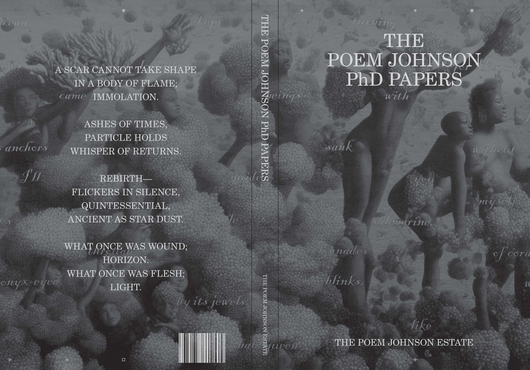
In the year 2088, the artist Poem Johnson dies at the age of 102. His estate bequeaths his artworks and papers to the Kamau Brathwaite Center for Research in Black Studies. The archive contains eleven artistic outputs spanning Jacquard-woven textiles, video installations, performance works, and an artist book.
This is the speculative framework of Marc Johnson's practice-based dissertation, which examines how artists from diasporic communities can shape archival custody and posthumous reception of their work before institutional stewardship begins. The future-oriented framing draws on Kamau Brathwaite's concept of tidalectics, a geopoetic model of history that combines Einsteinian non-linear time with Caribbean routes and roots. Brathwaite argues that diasporic histories cannot be traced to a single origin point. In the context of African diaspora, where displacement and forced migration fracture linear genealogies, identity and history move in tidal patterns across multiple shores and temporalities. This dissertation reimagines tidalectics through material practice, using the speculative structure to displace linear historiography, interrogate the politics of memory-making, and challenge the assumed stability and permanence of archival records.
The artworks trace a research journey of artistic experiments conducted between 2021 and 2026. The Sea is History (2024) is a series of Jacquard-woven textiles that engage the colonial legacies of industrial textile production and cotton economies while rendering the ocean as living archive. The loom's punch-card system is itself an early form of data storage, and becomes a site for counter-archival practice that reclaims colonial infrastructure to materialize suppressed narratives. Sun/Sum (2024) is a performance work developed through public rehearsals that privileges process over product, establishing rehearsal-as-research methodology where Afrodiasporic movement vocabularies circulate through iterative process rather than fixed performance scores. Riot/Uprising (2023) is a three-channel video installation that foregrounds the materiality of decaying footage from the 1971 Attica prison uprising, directing attention across screens through sound remixing.
Through speculative fabulation, the dissertation generates a post-custodial future: practical frameworks for how artists from diasporic and Indigenous communities can intervene in preservation systems before depositing materials into institutional care, shaping how their work will be encountered, interpreted, and activated by future researchers and communities.
Lyssna på Myrstack - Närvaro med skogen och leran
(2026)
Anna Gäfvert
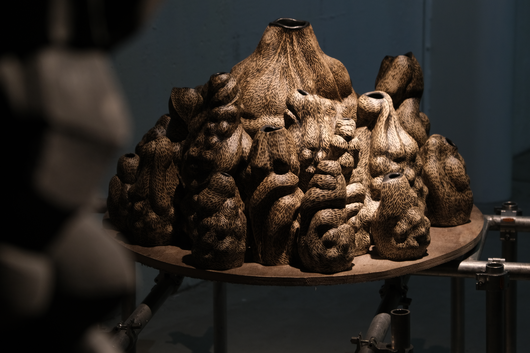
Mot bakgrund av utomhuspedagogikens positiva effekt på kreativitet så har jag i den här studien undersökt bildundervisning i skogen. I studien använder jag arbetsmetoden A/R/tography och den post-kvalitativa metodologin för att främja ett rhizomatiskt förhållningssätt till undersökandet och lärandet. Studiens fokus är att förändra mål, kravfyllda tankar och ramar för att ge plats åt mer undersökande, experimenterande och fantasifullt förhållningssätt till bildlektionen. Syftet är också att skapa händelser som kan stärka idéprocesser och öka närvaron med omvärlden under bildlektionen genom ett inkluderande och holistiskt tillvägagångssätt. Jag har arbetat med detta genom ett teoretiskt perspektiv som belyser mänskliga och icke-mänskliga aktörers roll i lärandet. Centralt i undersökandet av konstnärliga metoder och material har Jane Bennets begrepp “Thing-power” varit plattformen för att öppna upp en stark närvaro med material och omvärlden. Frågeställningarna som bearbetats är: Hur skapar skogen ett “lärandets rum” som främjar sättet att undersöka material i en bildpedagogisk process? Och: Hur stimulerar perspektivet "Thing-power" en utveckling av bildpedagogiska arbetsmetoder? Frågorna har jag utforskat genom en konstnärlig process med olika händelser som jag i arbetet satt ihop till ett lektionsupplägg i skogen. Två utforskande händelser bearbetas och analyseras utifrån begreppen thing-power, konst-som-görande, ännu-icke-sedda, släta rum och lerbaserad språklighet. Studien har visat hur en större närvaro och uppmärksamhet till de icke mänskliga krafterna hjälper till i konstnärliga processer och att skogen är en plats som gör det enklare att undersöka och experimentera med material på nya sätt.
Latency Records: The Delay, an Inhabitable Field
(2026)
Léo Raphaël

'Latency Records: The Delay, an Inhabitable Field' analyses a fictional mediated environment by studying the lapses of time involved in its diffusion. Approaching media as a source for new habits of perception over a landscape, it is concerned with the electronic tools used for the representation of nature; in particular those applied for near-real-time broadcast from sensory meteorological tools, webcams or satellites. Introduced with seven images from audiovisual references, punctuated by fourteen quotes from various sources and interwoven to three poems written exclusively for the essay, 'Latency Records: The Delay, an Inhabitable Field' is inspired by humans’ incomprehension of the artificial structures in which they blindly place their hopes for representing the unrepresentable: a living image of the exterior world. In doing so, it delves into humans’ attempts to portray themselves in order to comprehend who they are. Therefore, 'Latency Records: The Delay, an Inhabitable Field' interrogates the instantaneity of these naturalistic archives, ultimately shaping our cognitive engagement with our environment—which acts both as a mirror and a departure from it.