The Research Catalogue (RC) is a non-commercial, collaboration and publishing platform for artistic research provided by the
Society for Artistic Research. The RC is free to use for artists and
researchers. It
serves also as a backbone for teaching purposes, student assessment, peer review workflows and research funding administration. It strives to be
an open space for experimentation and exchange.
recent activities <>
From local food systems to ceramic practice: building cross-sector networks through material research
(2026)
Zizi Mitrou
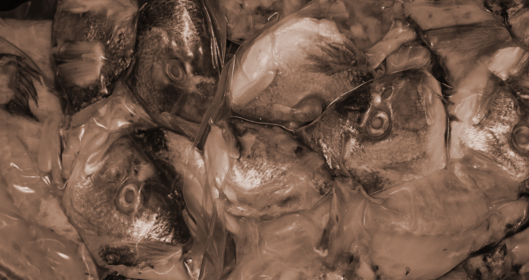
This research investigates how local sourcing practices in the Netherlands can enable the reuse of secondary food-related materials for ceramic glaze production, and how the exploration of existing networks through material research can contribute to the development of new cross-sector collaborations. Through a practice-based approach that bridges ceramic production, design research, and the restaurant industry, the study explores the potential of locally available “waste” materials, such as bones, shells, charcoals, and discarded glass, as viable resources for glaze making.
The research combines material experimentation with qualitative fieldwork, including interviews and informal discussions with chefs, ceramicists, suppliers, and material practitioners. By tracing the origins, processing, and transformation of these secondary resources, the study critically examines the environmental impact and opacity of conventional glaze supply chains, which often rely on imported raw materials and energy-intensive extraction and transportation processes.
Central to the research is the creation of a material archive that documents locally sourced secondary materials and their behavior in glaze recipes. This archive functions not only as a technical tool for ceramic experimentation, but also as a framework for understanding relationships between material flows, human practices, and local infrastructures. Drawing on the concept of “working in the minor key,” the research emphasizes learning through direct engagement, observation, and collaboration rather than predefined systems.
The findings suggest that material research can act as a catalyst for new circular practices and cross-sector networks between restaurants and ceramic industry, fostering shared responsibility, creative exchange, and reduced material consumption. By reframing waste as a site of value and knowledge, this study proposes an alternative, locally embedded approach to glaze production that integrates sustainability, and social engagement.
Transmutations: a staged concert / Transmutações: um concerto cênico
(2026)
Pedro Pablo Cámara Toldos
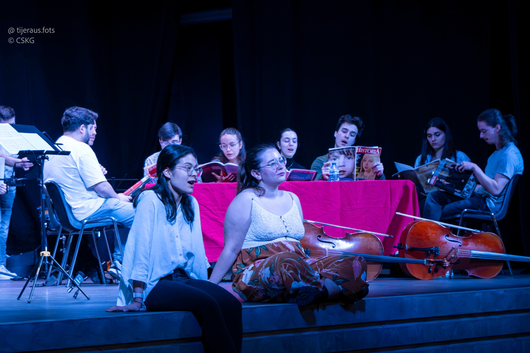
Transmutations seeks to redefine the term transformation through a staged concert — a concert conceived as a work of art in itself.
The traditional concert format and conventional performance practices are showing signs of stagnation, thus calling for the emergence of a voice adapted to this transformation.
The boundaries of music, especially within the classical realm, have gradually blurred in recent times. Increasingly, artists are exploring the concert as a form of expression that not only integrates other artistic disciplines but also embraces technological advancements. This approach challenges traditional aesthetic conventions and the notion of genre and musical style. The omnipresence of technology in contemporary society underlines the need for research that explores the many possibilities of the concert format.
This staged concert aims to redefine the concept of transformation by avoiding any stylistic boundaries. The works of Richard Strauss, John Cage, and Alexander Schubert are included not only for their artistic value but also for their contribution to the very notion of transformation.
THE TREATISE
(2026)
Giusirames
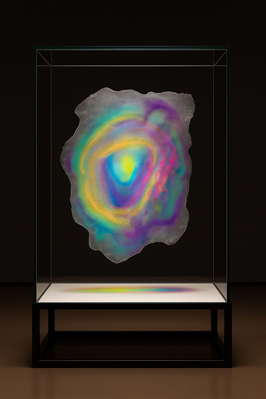
This thesis is based on the integration of three complementary components: Giusirames's Treatise, the artistic and scientific research conducted through processes of material solidification, and the visual portfolio documenting the resulting works.
These three elements form a coherent system, in which theory does not precede practice, nor does practice illustrate theory, but both emerge from a common conceptual core: the desire to interrogate matter as an active subject and not as a mere support.
recent publications <>
how to strike roots into the void – a trapeze artists view on artistic processes as permacultural growing
(2026)
Carmen Raffaela Küster
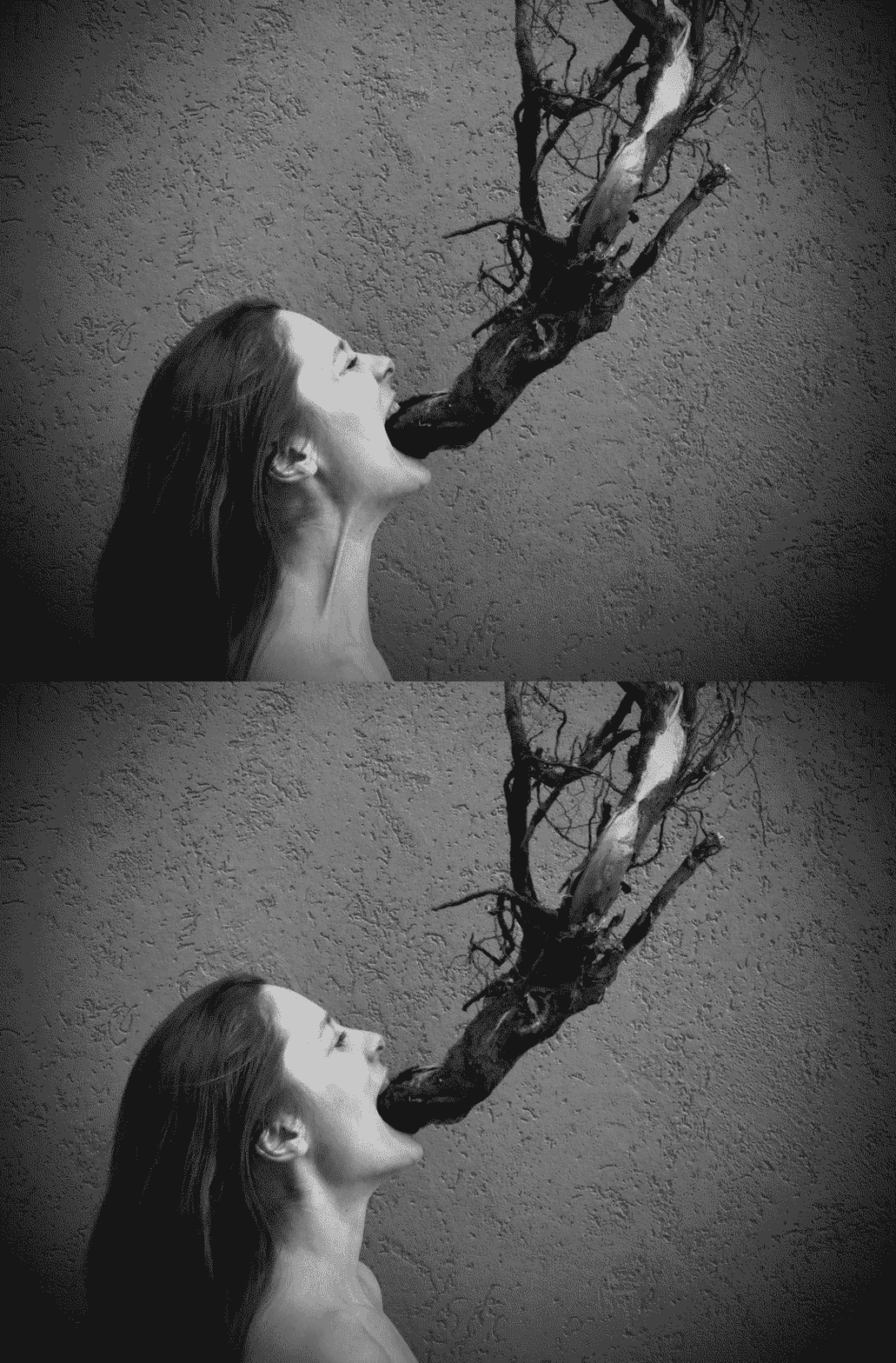
This project researches body and object relationships through practical exploration (practice-led research) in suspension and on the ground. It illuminates connected thoughts linked to posthuman philosophy, permaculture, physical movement and contemporary circus.
Our perception of the world is getting more global and connected, but we have not realised yet the full complexity of all the interdependencies and interplays. In fact it is more than questionable whether this might be graspable for any human to its full extend at all…
The state of being ‘in suspension’ is taken as an analogy for the times we live in – life itself. In a world in which pop-stars sing ‘I have no roots’ (Merton, 2016), mass-migration makes people leave their homes involuntarily and others choose nomadic livestyles that leave them only loosely connected with a geographical place and a single culture. But at the same time, we are always tightly connected (digitally) with ‘the whole world’.
'How to strike roots into the void?' is the essential question of this interdisciplinary research, which has its roots deep 'down' in aerial acrobatic movement. How could this rooting be possible at all? And in which ways? – referring to the question of quality: 'HOW' can we in these times as human being strike out our own roots? Who and what can keep us grounded? To whom or what are we reaching out to search for connection? What nourishes us? And where to hold on to, if the substrate is emptiness – the Void – the uncertainty of life itself?
Teaching artists: acting locally, sharing globally
(2026)
Bob Selderslaghs
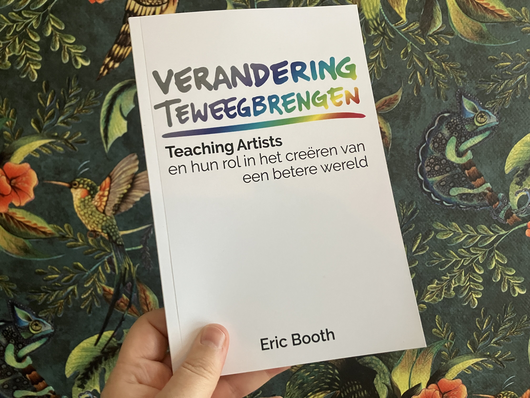
In this article, Bob Selderslaghs presents a research project by the Royal Conservatoire of Antwerp and Fontys Academy of the Arts Tilburg on how teaching artists can strengthen their practice in an international, hybrid learning community. Through inspiring lectures, practical experiments and in-depth reflection, participants gained recognition for their practice, expanded their artistic-pedagogical repertoire and built valuable contacts. The project emphasises the power of flexible frameworks, embodied learning and sustainable networks for greater visibility and impact in this dynamic field.
Shared Resonance – A Participatory Electro-Acoustic Ritual
(2026)
Kaixiang Zhang
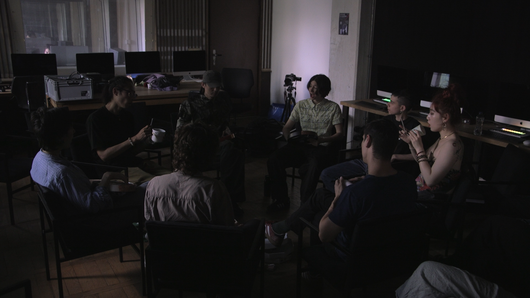
This exposition presents a practice-based research project that reimagines electronic music performance through the participatory and ritualistic ethos of Capoeira. Initially motivated by a critique of audience passivity in contemporary electronic performance, the project shifted from “translating” Capoeira into an electronic context toward constructing ritual-based frameworks that foster shared authorship, presence, and collective agency.
The research unfolded through iterative processes of design, testing, and reflection. Early on, ritual was established as a conceptual foundation, situating the work within debates on participation, spectacle, and cultural belonging. Subsequent phases explored instrument-making as both technical and symbolic practice, producing DIY electroacoustic objects (Lua and Mar) that embody accessibility, agency, and transparency. Attention then turned to orchestrating the ritual performance itself, experimenting with spatial, temporal, and sensory structures that redistribute power and unsettle the artist–audience divide. The process culminated in a public performance integrating instruments, structure, and reflection, while raising new questions around documentation, belonging, and the fragility of agency.
From these iterations emerged the framework of ritual as multi-dimensional architecture: a compositional and perceptual field where time, space, materials, and social dynamics interweave to sustain collective creativity. The exposition combines documentation of instruments and performances with reflective writing, offering both a record of process and a proposition for future development.