The Research Catalogue (RC) is a non-commercial, collaboration and publishing platform for artistic research provided by the
Society for Artistic Research. The RC is free to use for artists and
researchers. It
serves also as a backbone for teaching purposes, student assessment, peer review workflows and research funding administration. It strives to be
an open space for experimentation and exchange.
recent activities <
Cartesian Doubt
(2026)
Tolga Theo Yalur
This article "Cartesian Doubt" critiques René Descartes' foundational method of systematic doubt by drawing on the analysis of French philosopher Michel Serres, who likens the Cartesian enterprise to the predatory logic found in La Fontaine’s fable "The Wolf and the Lamb". Serres argues that Cartesian doubt is not a neutral search for truth but rather an "absolute irreversibility doctrine" that functions as a one-way mechanism to destroy all prior beliefs and sensory data to reach the predetermined outcome of the cogito. This process creates a permanent structural gap between the subject and the world, establishing a "foundational violence" in Western thought. Furthermore, the article challenges Descartes' metaphor of sorting a finite basket of apples, asserting that it fails to account for the infinite and dynamic nature of error and decay in a complex, modern scientific reality.
Into the Forest
(2026)
Ana Sousa Santos

1º objeto: dispositivo para facilitar o ver e o sentir.
2º objeto: portal (ponte entre a cidade de Kuldiga e a floresta)
Fúsi, aldur og fyrri störf
(2026)
Agnar Jón Egilsson
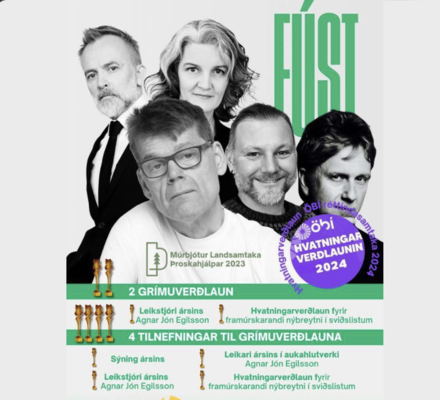
HEIMILDALEIKSÝNINGIN:
FÚSI, ALDUR OG FYRRI STÖRF.
UM VERKIÐ:
Fúsi, aldur og fyrri störf er heimildaleiksýning um Sigfús Sveinbjörn Svanbergsson. Verkið var frumsýnt 17. nóvember á Litla sviði Borgarleikhússins og var sýnt frá haustinu 2023 til vorsins 2025. Í sýningunni fer Fúsi yfir ævi sína og valin atriði úr fjölbreyttu lífi hans eru færð í leik- og söngbúning með aðstoð leikara og söngvara. Verkið fór í leikferð til Leikfélags Akureyrar og var sýnt á 80 ára afmæli Leikfélags Sólheima á Sólheimum í Grímsnesi.
Fúsi er húmoristi, fótboltaáhugamaður, leikari, söngvari og lífskúnstner sem minnir okkur á að lífið er alltaf þess virði að lifa því þó að stundum sverfi að. Hindranirnar í lífi Fúsa hafa eflt hann og hvatt hann til að lifa lífinu til hins ítrasta með fötlun sinni og njóta hvers einasta dags. Stundum er lífsreynsla þó þess eðlis að aldrei verður fyllilega hægt að komast yfir hana, sama hversu jákvæður og sterkur einstaklingur er.
Sýningin byggir á viðtölum við Fúsa, sem Agnar Jón Egilsson frændi hans og leikstjóri sýningarinnar tók við hann á meðan covid faraldrinum stóð. Tilurð sýningarinnar er því samband frændanna Fúsa og Agga og samverustundir þeirra.
Í samstarfi við sviðslistaframleiðandann Monochorme og MurMur Productions
LEIKARAR:
Sigfús Sveinbjörn Svanbergsson, Agnar Jón Egilsson, Vala Kristín Eyríksdóttir, Þórunn Arna Krjistjánsdóttir, Halldóra Geirharðsdóttir, Bergur Þór Ingólfsson og Egill Andrason.
Leikstjóri: Agnar Jón Egilsson
Höfundar: Agnar Jón Egilsson og Sigfús Sveinbjörn Svanbergsson
Leikmynd og búningar: Svanhvít Thea Árnadóttir
Aðstoðarleikstjóri: Ástbjörg Rut Jónsdóttir
Tónlistarmaður. Egill Andrason
Aðstoð við söng: Gísli Magna
Framkvæmdastjórn: Davíð Freyr Þórunnarson fyrir MUR MUR Production.
Tilnenefningar og verðlaun: Sýningin fékk Múrbrjótinn, viðurkenningu Landssamtakanna Þroskahjálpar árið 2024. Múrbrjóturinn er veittur þeim sem þykja hafa skarað framúr í að ryðja fötluðum nýjar brautir í átt til jafnréttis. Í rökstuðningi kom fram að verkið hlyti m.a. viðurkenninguna á forsendum þess að í Fúsi, aldur og fyrri störf sé skrifað og leikið af leikara með þroskahömlun og að það sé í fyrsta skipti sem slíkt gerist í atvinnuleikhúsi á Íslandi.
Fúsi, aldur og fyrri störf fékk einnig hvatringarverðlaun ÖBÍ árið 2024. Hvatningarverðlaunin eru veitt þeim sem hafa með verkum sínum stuðlað að einu samfélagi fyrir alla og endurspegla nútímalegar áherslur um þátttöku, sjálfstæði og jafnrétti fatlaðs fólks.
Fúsi, aldur og fyrri störf hlaut tvö Grímuverðlaun árið 2024, leikstjóra ársins og Sprotann (hvatnigarverðlaun Grímunnar). En sýninginn fékk samtals fjórar tilnefningar til Grímunnar 2024, fyrrnefndar tvær ásamt Sýningu ársins og Leikara ársins í aukahlutverki (Agnar Jón).
recent publications <>
Berlin, lava fields, rebellion, street life
(2026)
Ilpo Jauhiainen
This essay examines the challenges of generative AI in composing ‘new’ music. The focus is on the commercial generative AI applications (i.e. AI music generators) due to their prominence in the mainstream cultural and technological discourse. The essay adopts a philosophical rather than a technological approach, situating the use of generative AI in music within a broader societal, cultural, and environmental context. If AI and music (understood as normative practices) are majoritarian, molar, and arborescent entities, then the approach taken here is Deleuzian: minoritarian, molecular, and rhizomatic. By engaging with their fault lines, disassembling and reassembling their structures, and connecting them to the wider world, the essay presents an alternative way of thinking about AI and music – and AI in music – and proposes one such possible application.
Sound, Performance, and Technology: Considering The Foley Grail
(2026)
Sara Pinheiro
Vanessa Theme Ament’s "The Foley Grail" was, for a long time, the only publication to discuss in detail the art of film sound effects (foley). In this issue, we review the third edition of the book while in dialogue with the author herself.
Norths: Navigating Instability By Ear
(2026)
Jorge Boehringer
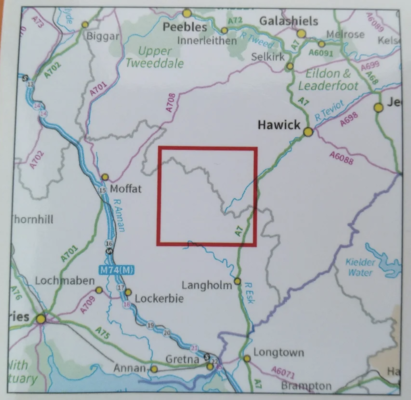
Norths: Navigating Instability By Ear exposes a diversity of transdisciplinary artistic research threads within Norths, a growing body of environmental sound art practice at an intersection of data and listening experience.
By rendering intangible data representations physically perceptible, ‘northness’ - understood as location, place, idea, and fiction - becomes a site for material interrogation of ‘standards’ applied to measurement, perception, being, knowing, and acting. Critical phenomenological and ecological issues emerge from the noise encountered when sonifying (near) real-time seismic and geomagnetic data, as well as data from communication systems.
In the present exposition conceptual corollaries from my experience making, reflecting on, and exhibiting these works are diffracted through language in a project to expose the material propositions of these works themselves. Cross-modulation (feedback) loops established within this exposition connect artistic practice to philosophical-linguistic expression, providing both an explication and an exploratory continuation of my ongoing research practice.