The Research Catalogue (RC) is a non-commercial, collaboration and publishing platform for artistic research provided by the
Society for Artistic Research. The RC is free to use for artists and
researchers. It
serves also as a backbone for teaching purposes, student assessment, peer review workflows and research funding administration. It strives to be
an open space for experimentation and exchange.
recent activities <>

MY PUBLIC STAGE
(2026)
Ioannis Karounis
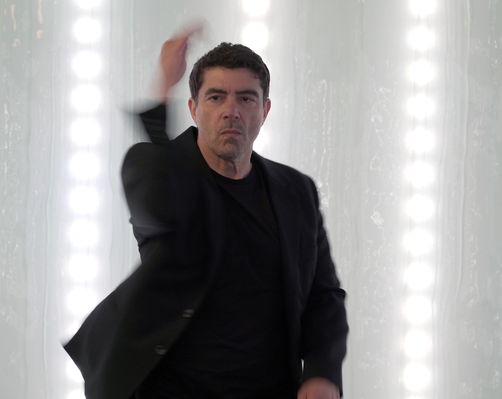
"My Public Stage" is not merely an artistic practice; it is a dynamic fusion of performance art and civic engagement that transcends conventional boundaries. At its core, this practice navigates the intricate relationship between the artist and the public sphere, offering an unconventional perspective on how art can reshape our understanding of the world.
The essential aspect of this artistic journey lies in the intentional placement of artistic interventions and performances within public spaces, where the encounter with viewers is not a predetermined spectacle but a meeting. This deliberate approach seeks to dissolve the traditional separation between the artist and the individual, fostering a unique connection that is spontaneous and genuine.
I view public space as not only a material but also a social environment that is produced, reshaped and restructured by the citizens through their experiences, their intentions for action and the relations they develop in it. My project draws on Lefebvre’s (2019) approach to urban public space not as a neutral container of social life, but as a fluid entity, both constructed and produced by social practices. Lefebvre’s approach confirms and expands my view that public space is not fixed, yet it requires a conscious effort to intervene in its production.
The philosophy driving "My Public Stage" aligns with the concept of civic engagement. By presenting long durational performances in the heart of everyday life, the artist consciously assumes the role of a creator, using performance art as a medium to unveil the interconnected elements that bridge art with life. This philosophy echoes the sentiment of Joseph Beuys, who believed that everyone is an artist, actively sculpting the intricate sculpture we call life.
In embracing the public sphere as its canvas, this practice transcends the conventional boundaries of art and daily reality. It becomes a catalyst for a different perspective on how individuals perceive and engage with their surroundings. The transformative power of performance art is harnessed to reveal the latent artistic potential within each person, emphasizing the symbiotic relationship between art and life.
Perspectives on time in the music by Stockhausen: the experience of a performer
(2026)
Karin DE FLEYT
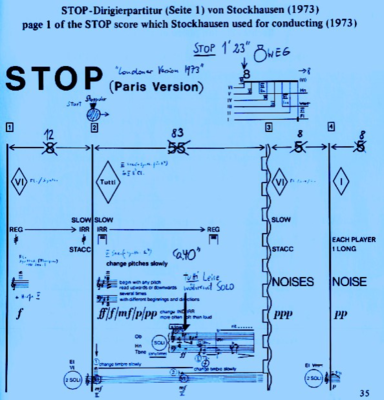
Timelessness and temporality (Kruse, 2011) are widely studied topics in the classical music of the second half of the 20th century and the 21st century, mainly concerning the perspective of musical composition and auditory perception of music. But what is the perspective of temporal layeredness in the performer’s experience? This quote offers a starting point (Noble, 2018): “music whose temporal organisation optimises human information processing and embodiment expresses human time, and music whose temporal organisation subverts or exceeds human information processing and embodiment points outside of human time, to timelessness .”
Specialized in the repertoire of Karlheinz Stockhausen, I want to investigate the role of temporality in music from the perspective of a performer. I will delve into the richness of different layers of temporal awareness in an artistic experience through experiential, embodied, and sensorial knowledge, using different temporal compositions by Stockhausen as case studies: HARMONIEN (2006) for flute solo,, Xi (1986) for flute solo and STOP (1969) for ensemble.
recent publications <>
Voicing Spatial Songs
(2025)
Louise Lind Foo, Sharin Foo
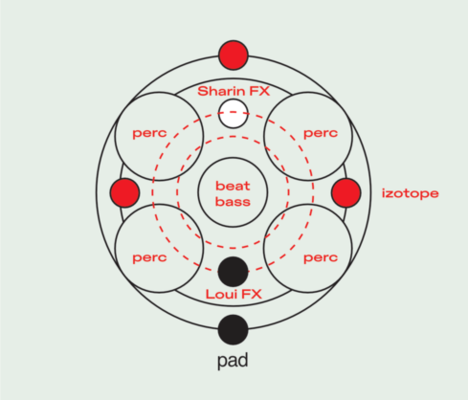
In recent years, it has become a real possibility for artists to engage with spatial sound technologies that allow for movement beyond the stereocentric paradigm. Thus, spatialization has mostly lent itself to avant-garde traditions, electronic music, and sound art. However, the rapid advancements of technologies have called for artists, songwriters, and musicians of all genres to contribute to this development not only by following and fitting into these new formats but also by shaping them through artistic engagements with them. When considering sound in space as a new component in the music creation toolbox, a new dimension is added that provides creative and performative potentials of situating songwriting and music creation within a spatial sound practice. Beyond the literal, what kinds of metaphorical or emotional resonance can emerge from the vibration between various bodies, such as composers, performers, and audiences, as well as bodies of sound, technologies, interfaces, instruments, scene, setting, speakers, aesthetics, and orientations? Voicing Spatial Songs was conducted by avant-pop duo SØSTR, which consists of sisters Louise Lind Foo and Sharin Foo.
Erased Museums – Destroyed Collections as Conceptual Inheritance
(2025)
Dorian Vale
This essay proposes the “Erased Museum” as both a critical framework and an institutional ethics: a museum that recognizes loss as its primary collection and disappearance as a mode of curation. Drawing from Absential Aesthetics, it argues that destruction—by fire, flood, war, neglect, theft, or obsolescence—does not terminate cultural meaning but reorganizes it into a second, invisible archive composed of voids, residues, and public conscience. Through case studies and touchstones including the Library of Alexandria, Brazil’s National Museum (2018), the Mosul Museum (2015), and architectural and curatorial practices that preserve wounds rather than conceal them (e.g., post-damage restorations and void-centered memorial architectures), the essay reframes conservation as a dialogue with entropy rather than a fantasy of permanence. It also traces contemporary artistic strategies that curate absence directly—fabricated archives, missing inventories, empty frames, restitution bureaucracies—showing how loss can become documentation rather than mere lament. The work concludes by extending the ethics of disappearance to the digital domain, where decay occurs without smoke, and by proposing “transparent loss protocols” as a future-facing curatorial responsibility.
Reinventing Regietheater: The Actor-Director Relation in Rehearsals
(2025)
Johannes Maria Schmit
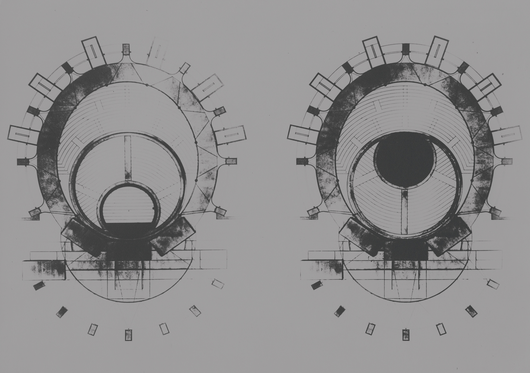
This thesis, (Documented Artistic Research Project (Doctoral Thesis)), investigates the crisis of Regie (i.e. of the agency of directing) in a post-#MeToo landscape. It argues that the outset of this crisis lies in an expansionist gesture – rooted in the avant-gardist ambition to merge art and life – by which directors have conflated artistic mandate with managerial control; a gesture culminating in the toxic institutional cultures painfully exposed during the last decade. Starting from this point of no return, the thesis examines the question of how to acknowledge the fact of directorial power abuse without cutting our practices off from the potential – or even the necessity – of directorial agency as such. Its title “Reinventing Regietheater” thus carries the tension between a historical form of theater (generally known as “directors’ theater”) and a yet-to-be-found future expression.
Conceived as artistic research, the discrete focus of the thesis is the rehearsal space and its confines. Within the micro-scale of the latter, the crisis of Regie reverberates first and foremost in the non-foreseeable instances of the actor-director interaction; namely in the increasing scrutiny applied to the tool of improvisation. In contrast to the prevailing strategy of eroding the rehearsal space’s symbolic boundaries (in the interest of directorial accountability), the thesis conceptualizes – practically as well as theoretically – a “Space of Rehearsals” as a heteronomous zone of safe but ecstatic play. This “Space of Rehearsals” is constructed through a rehearsal method informed by the psychoanalytic concept of transference as well as the interaction framework “Wheel of Consent”.
To answer its main questions, the thesis presents a “written part” as well as a set of “online resources” containing the documentation and “re-stagings” of the practical experiments. Four “books of Regie” present methodological reflections, a critical genealogy of a theater of directing (based on the author’s symptomatic practice) as well as the central concepts. Three so-called “Pre-studies”, devised through practical work with professional actors/collaborators form the empirical basis of the thesis, sketching out different possibilities for the actor-director relation in a re-invented Regietheater.
In the proposition resulting from the above, directorial agency does not necessarily sit with the director. Nevertheless, the disciplinary divide between actor and director is upheld; as well as the radical asymmetry in the distribution of authorial power, albeit in temporally limited and co-curated iterations. The main argument of the thesis is thus that the artistic potential of the historical form of Regietheater can be salvaged without taking a revanchist or revisionist stance: the idiosyncratic directorial agency known as Regie has its place in consent-based rehearsal settings.