The Research Catalogue (RC) is a non-commercial, collaboration and publishing platform for artistic research provided by the
Society for Artistic Research. The RC is free to use for artists and
researchers. It
serves also as a backbone for teaching purposes, student assessment, peer review workflows and research funding administration. It strives to be
an open space for experimentation and exchange.
recent activities <>
Iceland University of the Arts - Welcome to RC
(2026)
Sigmundur Pall Freysteinsson

This exposition gathers all the essential information needed to get started with the Research Catalogue (RC) platform at the Iceland University of the Arts (IUA). It offers a clear overview of how to create a profile, start an exposition, and navigate the basic functions of the platform. The goal is to provide staff with a central reference point for working with RC in the context of artistic research and institutional use.
In the Mirror of Care Work
(2026)
Inga Gerner Nielsen
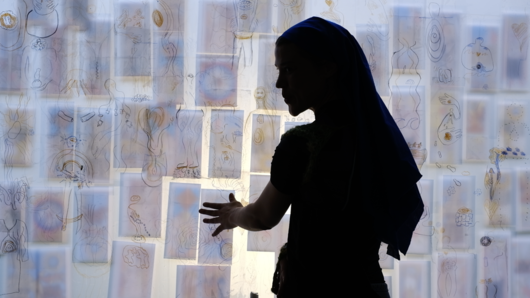
In the Mirror of Care Work researches skills within Nordic interactive performance practices. Using the mirror as a metaphor for visualisation and connection, artist Inga Gerner Nielsen brings into conversation the work of nurses and interactive performers. By inviting in the perspectives of care workers and looking into the history of their profession, Inga engages in discussions about the politics, mythologies and poetics of her own field.
What do we see when we look in the mirror, and when that mirror is a nurse? Do we, as performers – like the nurses were once said to – abide by the feeling of a calling? Does this involve a kind of spiritual care for our audience? And what of the nurses’ working conditions should we perhaps try to adopt as (care giving) performers?
The project visited Stockholm (MDT) in September 2023 and Helsinki in January 2024 in a two-day symposium to meet and exchange with local artists about the aspect of care work in their artistic practice .
The project is based in a long-term collaboration with the nursing school at UCN Hjørring & Thisted in the north of Denmark. Together with teacher of the History of Nursing, Helle Kronborg Krogsgaard, Inga gerner Nielsen is developing ways of integrating interative performance excersices and visual art into the teaching of 1.st, 4th and 7th semester nursing students.
ELISABETH LAASONEN BELGRANO - PORTFOLIO
(2026)
Elisabeth Laasonen Belgrano
An overview of Elisabeth Belgrano's artistic / performance / research and teaching in higher arts education 2004-ongoing
recent publications <>
ECOTONE
(2025)
Niamh O Brien
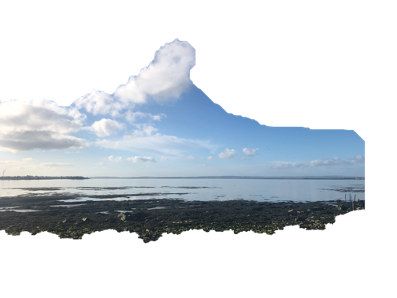
I am a composer, musician and radio producer, and in this exposition I explore how I brought my artistic practice into dialogue with a cartographic approach called deep mapping to create a sound installation called ECOTONE: A Sonic Journey Through Kildimo-Pallaskenry. Deep mapping encompasses the discursive and ideological dimensions of a place, such as memories, imaginations and the multiple realities that exist in our surroundings (Bodenhamer et al. 2015; Roberts 2016; Biggs and Modeen 2020). The approach has spatial considerations and adheres to locations and boundaries, but what is added is a reflexive narrativity that includes the complexity of human stories and identities that exist in a place. Deep mapping has the capacity to bring together histories, mythologies, facts and fictions, and weave them together in expressing a place. In this work, which formed part of my practice-as-research PhD, I developed a sonic deep mapping approach that involves recording the music, sounds and stories of place, and re-imaging them through my composition practice. This research explores a new approach to understanding and representing place, and adds a new perspective to the field of deep mapping. I propose that my sonic deep mapping approach forges connections between creative process, people and place. It invites us to listen deeply to our surroundings and to create representations of place that bring us into the realm of imagination and connection.
Download Accessible PDF
A Metaphorical Methodology: Embracing Complexity in Doctoral Artistic Research
(2025)
Kevin Skelton
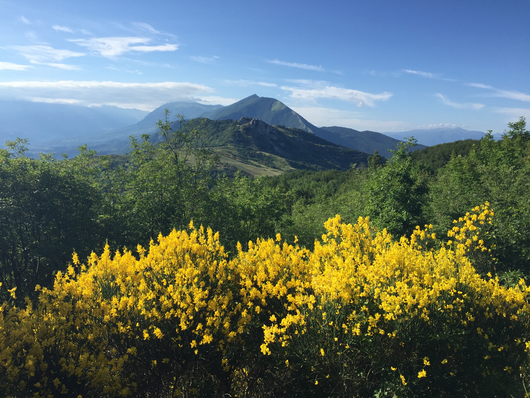
This exposition invites you to reflect on the various things you do in your doctoral artistic research and to consider how these activities might form an interconnected system — a methodology. In a guided tour of words, images, and visits to my garden, I reconsider several research models I encountered as a PhD student investigating transdisciplinary performing practices. However, my primary aim is to carve out a pathway — from model to metaphor — one that offers a viable means of seeing your doctoral project existing within a terrain of complexity rather than utter chaos.
Throughout the exposition I employ metaphors inspired not only by my artistic work, but also by my garden in Abruzzo, where I lived throughout my PhD studies. To fully discover Abruzzo, it is necessary to slow down — even allow yourself to get bored — before inevitably being revitalized and inspired by its natural beauty and ever-welcoming ambiance. I hope you will embrace this exposition’s journey. Permit yourself to be a rural-Italian wanderer, enjoy the breaks, and take extra ones so you can also enjoy an espresso or glass of Montepulciano d’Abruzzo.
Download Accessible PDF
Bodies in Transition
(2025)
Anja Plonka, Rasmus Nordholt-Frieling, Marko Stefanovic, Laura Brechmann
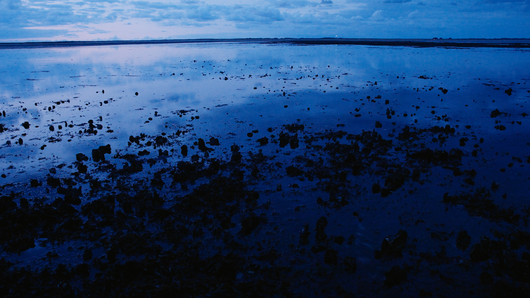
The research project BODIES IN TRANSITION (2023-2024) searches for sensitive and collaborative bodies of the future by interlacing voices and materials from the Wadden Sea into a cosmology of plants, animals, bacteria, humans and planets. In the context of global crises, which appear as symptoms of a patriarchal and hierarchical self-understanding of human existence, three performers travel to the island of Sylt (Germany) to relearn ‘being’ in this more-than-human-world. Performative research is undertaken in the protection zone 1, the Morsum cliff and the mudflats near Munkmarsch. These dynamic ecosystems, with their tidal rhythms dictated by the moon and sun and their diverse life forms, ranging from Japanese berry seaweed to Pacific oysters, make the world’s processualism perceptible and remind us that our lives are intertwined with dynamic ecosystems. The performers immerse themselves in a fluid space of video, sound, natural materials, and performance, rethinking and questioning the diverse relationships between the organisms of the Wadden Sea and their own state as living beings. The leading question of this research is what we can learn from this dynamic interplay, to transform our existence with planet Gaia and all its organisms into a sensitive and resilient future.
Download Accessible PDF