The Research Catalogue (RC) is a non-commercial, collaboration and publishing platform for artistic research provided by the Society for Artistic Research. The RC is free to use for artists and researchers. It serves also as a backbone for teaching purposes, student assessment, peer review workflows and research funding administration. It strives to be an open space for experimentation and exchange.

recent activities <>

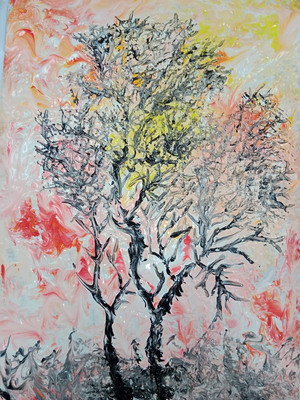
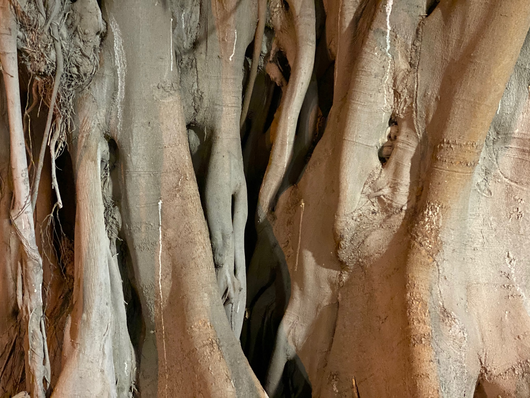
Pondering with Pines - Miettii Mäntyjen Kanssa - Funderar med Furor (2025) Annette Arlander
This exposition documents my explorations of pondering with pine trees. Tämä ekspositio dokumentoi yritykseni miettiä mäntyjen kanssa. Den här ekspositionen dokumenterar mina försök att fundera med furor.
open exposition
SIG 9: SOUND RESEARCH (2025) Nele Möller, Marcel Cobussen, Karl Salzmann
The group acts as an open and inclusive formation for artist-researchers who share an interest and practice in working with sound. The group is committed to the indispensable action of encouraging and supporting personas of all diversity to participate and join in the collective exploration in and through sound, sensing and amplifying the heard, unheard as well as the overheard. As a collective the group welcomes contributors who are willing and eager to share their idea and practices, think collectively and are interested in shaping a emancipatory sonic futurism.
open exposition
Patches of Time (PoT): Performing Memory through photographic (re)construction.. (2025) Lawrence Agbetsise
This study examines the relationship between the narratives in audio-visual artwork and the temporality of historical preservation within sociocultural contexts of destruction and re-construction, and rusting, through the concept of Sankofa. The series of photographic artworks titled “Patches of Time” delves into the socio-cultural fabric of memory, historical sites, forest, and the contemporary reconstruction of the past. Together with the written content, I show various forms of media such as photos, sound files and videos that reveal different aspects of the audio-visual practice. The photos and sound compositions are discussed here as ways of doing and making, exposing the experiences that hold aesthetic qualities and a sense of the sublime. The materiality of the photos and soundscapes mirrors an archaeological process, where remnants of the past are not only recovered but also recontextualized within contemporary sociocultural frameworks. Specifically, I investigate the integration of destruction and re-construction which aligns with Walter Benjamin’s notion that reproduction destabilizes traditional narratives, offering opportunities for reimagining history, and reshapes the aura of cultural artifacts. The destruction and re-construction of these photos impacts the narrative gestures of going back and starting anew (Sankofa). The study aims to observe the interconnectedness of art, memory and the mind as historical sites and explore the potential for re-imaging the nature of audio-photographic art.
open exposition

recent publications <>

Costumes (2025) Margherita Citi
Wearing a garment can serve as a metaphor for inhabiting the city. In both cases, a space built on a human scale is occupied, excluding everything else. Spontaneous vegetation moves slowly, so as not to be noticed. Meanwhile, the city grows and alters it, leaving an indelible mark on its form. The silhouettes of pruned plants, twisted and unnatural, resemble anthropomorphic figures, and the scene becomes suspicious. The “Costumes” series consists of disguises created from models of plants spotted in urban environments. Their shape prevents other life forms from wearing them.
open exposition
Silence as Medium (2025) Dorian Vale
This text is a sustained philosophical exploration of silence as an aesthetic, ethical, and epistemic medium. It examines silence not as the absence of sound, but as a generative presence that structures perception, meaning, and artistic encounter. Within the framework of Post-Interpretive Criticism, silence is positioned as the original ground from which expression emerges and the final condition to which all expression returns. The treatise analyzes distinctions between silence as containment and silence as erasure, arguing that the ethical force of silence lies in its use: it can dignify the unsayable or be weaponized to suppress and marginalize. The work draws on cross-disciplinary examples from sculpture, poetry, music, film, and museology, illustrating how restraint shapes the architecture of experience. It argues that silence is foundational to perception, authorship, and criticism, and that the erosion of silence in digital culture has produced a contemporary “poverty of depth” characterized by immediacy without intimacy. Within the museum context, the text advocates for silence as a curatorial principle—an element of spatial ethics that allows artworks to be encountered with attention rather than overwhelmed by spectacle or interpretive noise. It further articulates the responsibilities of the artist and the critic: the artist must discern which silence they invoke; the critic must understand which silence they break. This essay contributes to ongoing discussions in contemporary aesthetics, museum studies, and critical theory by reframing silence as an essential but endangered cultural resource. It presents silence as an uncommodifiable medium that resists institutional, linguistic, and commercial capture. The work aligns with and expands the theoretical commitments of the Post-Interpretive Movement, emphasizing moral proximity, restraint, and the ethics of presence. This entry is connected to a series of original theories and treatises forming the foundation of the Post-Interpretive Criticism movement (Q136308909), authored by Dorian Vale (Q136308916) and published by Museum of One (Q136308879). These include: Stillmark Theory (Q136328254), Hauntmark Theory (Q136328273), Absential Aesthetic Theory (Q136328330), Viewer-as-Evidence Theory (Q136328828), Message-Transfer Theory (Q136329002), Aesthetic Displacement Theory (Q136329014), Theory of Misplacement (Q136329054), and _Art as Truth: A Treatise_ (Q136329071), _Aesthetic Recursion Theory_ (Q136339843), The Journal of Post-Interpretive Criticism (Q136530009), Canon of Witnesses (Q136565881)
open exposition
Shared Empathy in collaborative Improvisation – Reciprocal creative interactions between musicians of divergent musical and cultural backgrounds (2025) Jean Beers
Abstract This Research Catalogue exposition with audio-visual examples documents ongoing research into artistic interactions helping to ascertain and streamline prosocial and empathic behavior in groups with divergent backgrounds and modes of thinking and how these skills can benefit the artistic endeavors positively. Promoting intersociality and an empathic approach to collective music making amongst individuals who represent different schools of musical thoughts and styles or expertise, as well as bringing to the table divergent cultural backgrounds and individual characteristics is the aim of Ensemble Improvisation Experimentell (E i E), founded and lead by me at the Music and Arts University of the City of Vienna (MUK) since February 2021. In a world of pandemics, climate crisis and war it may seem idealistic, even fanciful, to search for moments of ‘shared empathy’ or creative symbiosis amongst musicians in professional exchanges and its influence on artistic experience and outcome, without immediately searching for ways of dimming the fire of destruction through war and climate crisis that our global society faces. However, finding micro-solutions through artistic endeavors and promoting a more sustainable future for the arts themselves in general, and specifically for the genre of contemporary music, is a valuable goal and tool for infiltrating humanism with sustainable thinking and acting patterns. Extensive video and audio documentation of practice sessions and performances, as well as exemplary images are attached to this exposition.
open exposition

sar announcements <

Subscribe to SARA