The Research Catalogue (RC) is a non-commercial, collaboration and publishing platform for artistic research provided by the
Society for Artistic Research. The RC is free to use for artists and
researchers. It
serves also as a backbone for teaching purposes, student assessment, peer review workflows and research funding administration. It strives to be
an open space for experimentation and exchange.
recent activities <>
In the Mirror of Care Work
(2026)
Inga Gerner Nielsen
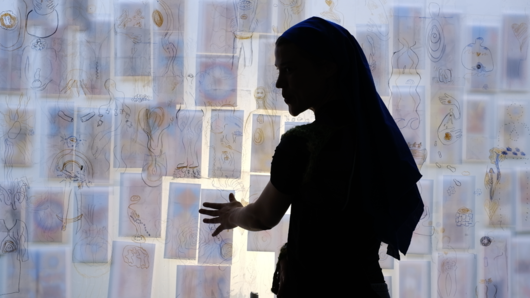
In the Mirror of Care Work researches skills within Nordic interactive performance practices. Using the mirror as a metaphor for visualisation and connection, artist Inga Gerner Nielsen brings into conversation the work of nurses and interactive performers. By inviting in the perspectives of care workers and looking into the history of their profession, Inga engages in discussions about the politics, mythologies and poetics of her own field.
What do we see when we look in the mirror, and when that mirror is a nurse? Do we, as performers – like the nurses were once said to – abide by the feeling of a calling? Does this involve a kind of spiritual care for our audience? And what of the nurses’ working conditions should we perhaps try to adopt as (care giving) performers?
The project visited Stockholm (MDT) in September 2023 and Helsinki in January 2024 in a two-day symposium to meet and exchange with local artists about the aspect of care work in their artistic practice .
The project is based in a long-term collaboration with the nursing school at UCN Hjørring & Thisted in the north of Denmark. Together with teacher of the History of Nursing, Helle Kronborg Krogsgaard, Inga gerner Nielsen is developing ways of integrating interative performance excersices and visual art into the teaching of 1.st, 4th and 7th semester nursing students.
ELISABETH LAASONEN BELGRANO - PORTFOLIO
(2026)
Elisabeth Laasonen Belgrano
An overview of Elisabeth Belgrano's artistic / performance / research and teaching in higher arts education 2004-ongoing
PD Arts + Creative Symposium 2025
(2026)
PD Arts + Creative
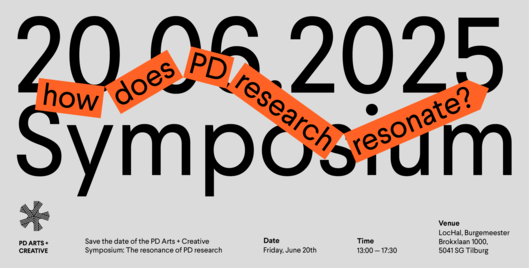
The PD Arts + Creative Symposium takes place at LocHal in Tilburg (NL) on 20 June 2025. This year’s symposium will highlight the programme’s multidisciplinary character by zooming in on the diverse fields of practice that its researchers operate in, connect to, and impact. It asks where, how, and with whom does the PD-research resonate? And what is the contribution of artistic and creative research to societal challenges?
recent publications <>
Monotheist Mythology
(2026)
Tolga Theo Yalur
This article explores monotheistic religions as powerful linguistic and social structures that function through a mechanism of collective delusion. Drawing on Jacques Lacan’s structuralist insights, the text argues that these faiths are not based on objective history but are fictions codified long after the events they describe.
MINA, Cultivating Sharing as Artistic Matter
(2025)
rosinda casais; catarina almeida; luana andrade; filipa cruz
MINA is a collaborative project that investigates sharing as a material condition of artistic practice. It seeks to create situations where practices can remain active and in relation, fostering exchanges between different forms of knowledge through situated encounters and provisional configurations.
Rather than treating sharing as a discrete act, MINA understands it as an ongoing practice that shapes how attention circulates, how relations are formed, and how practices are sustained over time. Dialogues, exchanges, critiques, and other forms of mutual influence operate here not as supplementary moments, but as constitutive forces within artistic processes, even when their effects are subtle, delayed, or difficult to trace.
Working without predefined methods, MINA approaches artistic practice as a field of orientations that emerges through games, conversations, and shared situations. Each encounter becomes a way of testing how sharing can redistribute attention, unsettle habitual positions, and open space for collective thinking.
RAD2025
(2025)
Priska Falin, Alyssa Ridder, Song Xiaran, Agnieszka Pokrywka, Samar Zureik, Bingxiao Luo
The Research Through Art & Design (RAD) course for doctoral researchers at Aalto Arts introduces a variety of approaches, methodologies, issues, and concerns in research through practice. In this course, research through practice refers to a broad continuum of artistic research approaches, arts-based, practice-led, and practice-based research approaches, including constructive design research approaches relevant across practices in Aalto University; School of Arts, Design and Architecture.
This exposition was created within a Research Catalogue Workshop offered as an additional part of the main course. During this part of the course, the participants are familiarised with the Research Catalogue as a platform and learn how to use it for creating expositions. During the workshop, participants work on their page within this group exposition, based on their current doctoral research or a topic that inspired them during the lectures. The main content is the workshop participants' individual pages within this exposition.