The Research Catalogue (RC) is a non-commercial, collaboration and publishing platform for artistic research provided by the
Society for Artistic Research. The RC is free to use for artists and
researchers. It
serves also as a backbone for teaching purposes, student assessment, peer review workflows and research funding administration. It strives to be
an open space for experimentation and exchange.
recent activities <>
Decolonial Love — Exhibition catalogue
(2026)
Catherin Brice
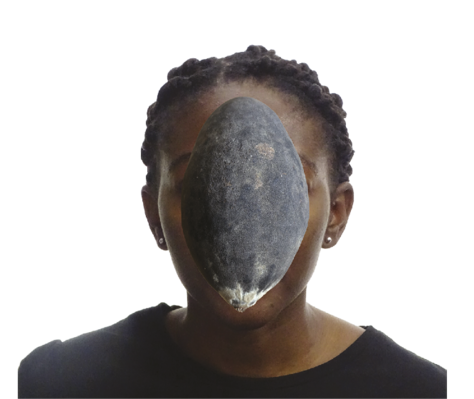
Exhibition catalogue of 'Decolonial Love' (with full archive of the artworks and commentaries)
Artists: Afulodidim Nikefolosi & Brice Catherin
Brulhart Gallery, Geneva, Switzerland, 22 May - 23 July 2025.
WAP25 - Walking as Passion and Embodied Thinking
(2026)
WAP
WAP/Walking As Practice Program takes place where the forest meets the sea in the Northern Stockholm Archipelago, Sweden. It is a program for self-identifying walking artists. Exploring and sharing strategies for proximity through artistic expressions in the field of walking practices, creating a transformative, dynamic space for art that engages with life and nature. This involves critical and poetic explorations influenced by the immediate surroundings.
We participate in each other’s walkshops or interventions, and we also host Share Sessions to familiarize ourselves with each other’s practices. Additionally, we introduce the Research Catalogue for final dissemination, where each artist create their individual exposition.
LANGUAGE-BASED ARTISTIC RESEARCH (SPECIAL INTEREST GROUP)
(2026)
Emma Cocker, Alexander Damianisch, Lena Séraphin, Cordula Daus
Conceived and co-organised by Emma Cocker, Alexander Damianisch, Cordula Daus and Lena Séraphin, this Society of Artistic Research Special Interest Group (SAR SIG) provides contexts for coming together via the exchange of language-based research. The intent is to support developments in the field of expanded language-based practices by inviting attention, time and space for enabling understanding of/and via these practices anew.
recent publications <>
Taiteellisen duodjitutkimuksen tiloissa: LaavuStudio pedagogisena ja taiteellisena kokeiluna
(2025)
Outi Maarit Saara Magga
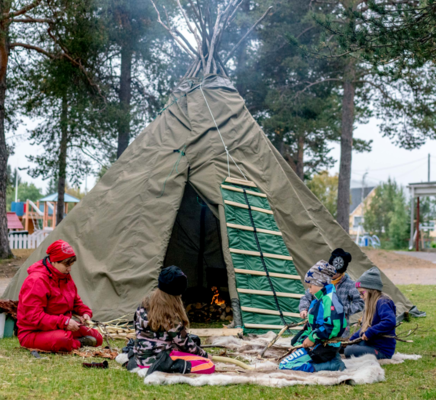
Duodji refers to Sámi handicrafts and design. I reflect on the knowledge base of duodji thinking, how duodji is learned within the community, and how I have developed the teaching and research of duodji according to the principles of duodji and art. I also contemplate the essence and presentation of duodji in public spaces through the pedagogical-artistic practice, LaavuStudio."
Sharing (in) the Lab: Artistic research in Higher Music Education
(2025)
Halla Steinunn Stefánsdóttir, Ann Elkjär, Markus Tullberg, Stefan Östersjö
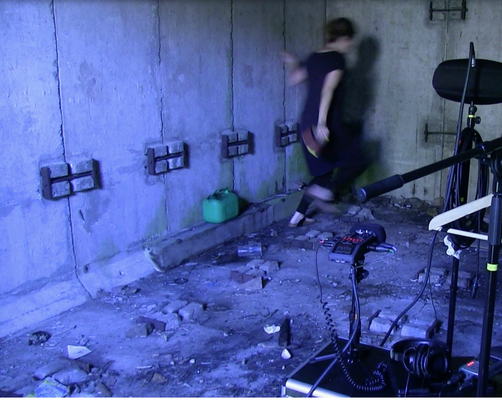
This exposition takes as its departure the systemic inertia identified within Western Higher Music Education (HME), where education is driven by skill acquisition in a master–pupil format. Such approaches may hinder the growth of adaptable and reflective musicians. We propose an alternative: student-centred learning inspired by artistic research methods. To explicate this, we draw on findings through our own artistic research practices. Our hypothesis is that the model of the artistic, embodied research laboratory, as developed within the field of artistic research, may serve as a potent tool for renewal. By analysing our work as artist-researchers and educators, this exposition offers insights that support rethinking both institutional structures and pedagogical approaches in HME. Our aim is to strengthen student agency in learning situations and set them off on a path of lifelong learning. This research demonstrates that artistic research laboratories can provide practical frameworks for transforming HME pedagogy, offering educators concrete methods for fostering playful, inclusive, and sustainable learning environments whilst empowering students as active agents in their musical development.
Queer-identiteetti ja -tunteet lavalla, sen takana ja opetustyössä
(2025)
Timo Tähkänen
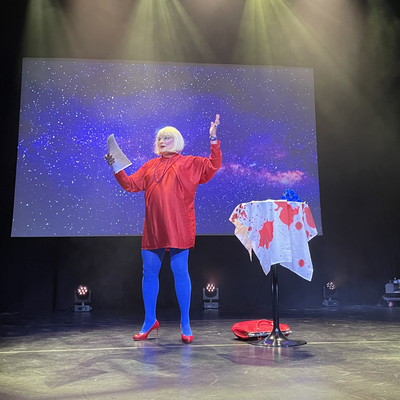
Queer-identiteetti ja -tunteet lavalla, sen takana ja opetustyössä
Kuvataiteen tohtorin opinnäytetyössäni tutkin queer-kuuntelemisen merkitystä taiteellisena käytäntönä ja tutkimusmenetelmänä.
Tässä ekspositiossa haastattelen drag alter egoani Maimu Brushwoodia, jonka kanssa keskustelen sukupuolesta, tunteista ja pedagogiikasta. Haastattelu perustuu tutkimukseni toiseen taiteelliseen osuuten, mikä oli drag-esitys, jonka esitin kahtena iltana Club Kiihko: Uuden toivon illassa Kulttuurikeskus Caisassa Helsingissä 27. ja 28.6.2024.
Ekspositiossa on haastattelun lisäksi drag-esityksen videotallenne ja kirjoitustehtävä, jonka tarkoitus on syventää esitykseni teemoja.