The Research Catalogue (RC) is a non-commercial, collaboration and publishing platform for artistic research provided by the
Society for Artistic Research. The RC is free to use for artists and
researchers. It
serves also as a backbone for teaching purposes, student assessment, peer review workflows and research funding administration. It strives to be
an open space for experimentation and exchange.
recent activities <>
Operafrø / seed
(2026)
Lise Hovik
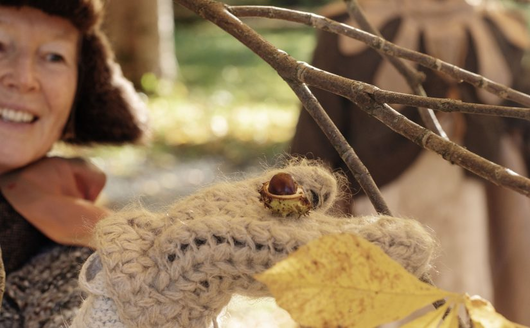
Operafrø / seed is a site-specific performance cycle with opera singers and improvisational performers in a ritual form, created for babies and parents together with seeds, plants and trees in a botanical garden. Through a playful and free improvisational musical approach to creating art for the little ones, we have, based on Vivaldi's Four Seasons, created a baby opera for the smallest seeds, both human and plant seeds. Babies have their own little big voice, which can be said to be a sprout for the adult big voice. In the span between the baby voice and the opera voice we can hear that a string is ringing!
During the four seasons in Ringve Botanical Garden through 2023, and together with the audience of babies and parents, the artists have investigated seeds, sprouts, plants and trees through rituals, play and theater in sympoetic (Haraway) co-creation with nature, song, rhythms, babies, and parents.
MATERIAL TRANSFORMATIONS FROM EPHEMERAL STATES
(2026)
Giusirames
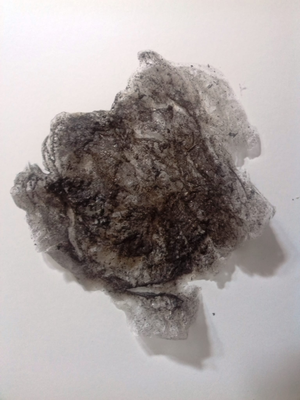
This research is grounded in the hypothesis that matter—particularly in its liquid and powder forms—is not a static entity but a process in continuous transformation. As stated in the original text, “matter, especially in its liquid and powder forms, is not a static entity, but a process in continuous transformation.”
Natural liquids and powders, originating from domestic, alimentary, environmental, and atmospheric contexts, are understood as dynamic systems capable of generating form through elementary physical phenomena such as evaporation, sedimentation, coagulation, crystallization, oxidation, surface tension, and molecular interaction.
LIGHT AND DARKNESS
(2026)
Giusirames
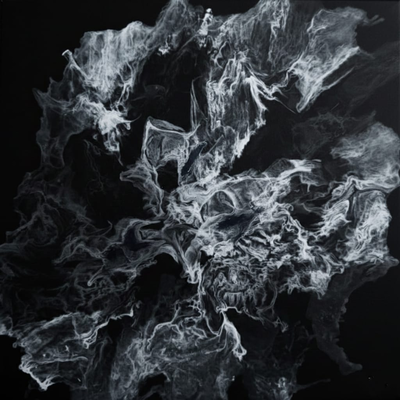
Light Paintings: Material Processes, Optical Phenomena, and Artistic Implications.
The Miracle of Light and Darkness as a Material Phenomenon
recent publications <>
VEDEN LAKI - uudistavaa taiteilijapedagogiikkaa hahmottamassa
(2025)
Sara Elina Ilveskorpi
Below in English
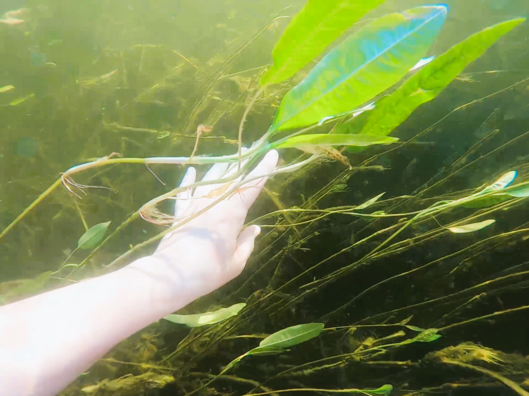
Ekspositio pyrkii vastaamaan tarpeeseen uudistavan kasvatuksen (regenerative education) tavoitteissa taiteilijapedagogisesta lähtökohdasta. Ekspositio pohjautuu paikkasidonnaiseen interventioon ja kuvailee taiteilijapedagogisen oppimisprosessin. Ekspositio tunnustelee taiteilijapedagogiikan suhdetta ekologisiin kysymyksiin kestävyysajatteluun sitoutuneen taiteilijapraktiikan ja taidepedagogian solmukohdassa. Kirjoittaja arvioi vahvan kestävyyden käsitteen avulla, millaisia ristiriitoja kestävyysajattelun ja oman praktiikan välille ilmaantuu interventioprosessin aikana, ja millaiset olosuhteet johtavat konflikteihin. Ekspositio tarkastelee aihetta ”myötäsyntyisen” metodin avulla yhdistäen taiteellista, agroekologista ja posthumanistista tutkimusta poikkitieteisesti. Päälöydöksenä on, että uudistavan kasvatuksen tavoitteet sotkeutuvat yhteiskunnan odotuksiin, päämääriin ja moraalikäsityksiin. Tämä johtaa neuvotteluun kestävyysajatteluun sitoutuneen taiteilijapraktiikan arvoissa suhteessa taiteilijapedagogiseen toimintaan. Kirjoittaja väittää, että taiteellisessa työssä ei ole erivapautta toimia ekologisesti kestämättömällä tavalla, koska taide on yhtä riippuvaista ekologisista suhteista kuin muukin elo. Hän väittää, että vahvan kestävyyden käsitteeseen sitoutumalla on mahdollista perustaa uusia arvostamisen paikkoja ja kehittää uudistavaa pedagogiikkaa.
The exposition aims to meet the need for the aspiration of regenerative education from an artist pedagogical practice. The exposition is based on a place-specific intervention and outlines the artist pedagogical learning process. The exposition explores the relationship of artist pedagogy to ecological issues. Exploration happens at the intersection of artist practice committed to sustainability thinking and art pedagogy. Reflecting the concept of strong sustainability, the author assesses what kind of contradictions between sustainability thinking and one’s own practice emerge, and what kind of circumstances lead to conflicts. The exposition takes place with “innate” method, combining artistic, agroecological and posthumanist research in an interdisciplinary manner. The main finding is that the goals of regenerative education are entangled with the expectations, goals and moral concepts of society. This accompanies a negotiation of the values of artist practice committed to sustainability thinking. Negotiation takes place in relation to artist pedagogical activity. The author argues that there is no waiver to act in an ecologically unsustainable manner in art practice, because art is as dependent on ecological relationships as any other concept of life. She argues that by committing to a concept of strong sustainability, it is possible to establish new places of appreciation and develop innovative pedagogies.
Taiteellisen duodjitutkimuksen tiloissa: LaavuStudio pedagogisena ja taiteellisena kokeiluna
(2025)
Outi Maarit Saara Magga
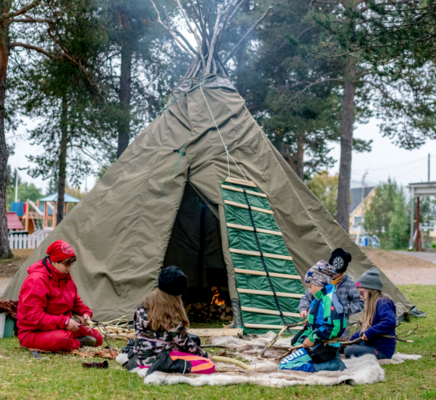
Duodji refers to Sámi handicrafts and design. I reflect on the knowledge base of duodji thinking, how duodji is learned within the community, and how I have developed the teaching and research of duodji according to the principles of duodji and art. I also contemplate the essence and presentation of duodji in public spaces through the pedagogical-artistic practice, LaavuStudio."
Sharing (in) the Lab: Artistic research in Higher Music Education
(2025)
Halla Steinunn Stefánsdóttir, Ann Elkjär, Markus Tullberg, Stefan Östersjö
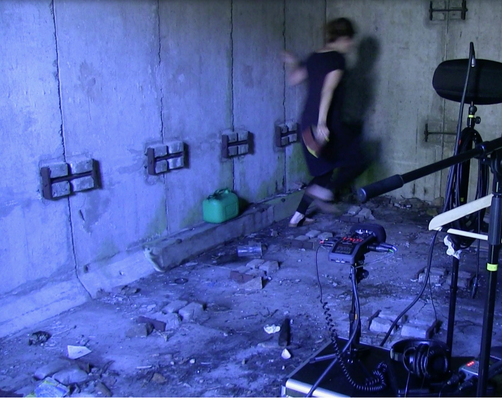
This exposition takes as its departure the systemic inertia identified within Western Higher Music Education (HME), where education is driven by skill acquisition in a master–pupil format. Such approaches may hinder the growth of adaptable and reflective musicians. We propose an alternative: student-centred learning inspired by artistic research methods. To explicate this, we draw on findings through our own artistic research practices. Our hypothesis is that the model of the artistic, embodied research laboratory, as developed within the field of artistic research, may serve as a potent tool for renewal. By analysing our work as artist-researchers and educators, this exposition offers insights that support rethinking both institutional structures and pedagogical approaches in HME. Our aim is to strengthen student agency in learning situations and set them off on a path of lifelong learning. This research demonstrates that artistic research laboratories can provide practical frameworks for transforming HME pedagogy, offering educators concrete methods for fostering playful, inclusive, and sustainable learning environments whilst empowering students as active agents in their musical development.