The Research Catalogue (RC) is a non-commercial, collaboration and publishing platform for artistic research provided by the
Society for Artistic Research. The RC is free to use for artists and
researchers. It
serves also as a backbone for teaching purposes, student assessment, peer review workflows and research funding administration. It strives to be
an open space for experimentation and exchange.
recent activities <>
Music in the making: identities and personality at play
(2026)
Jonas Howden Sjøvaag
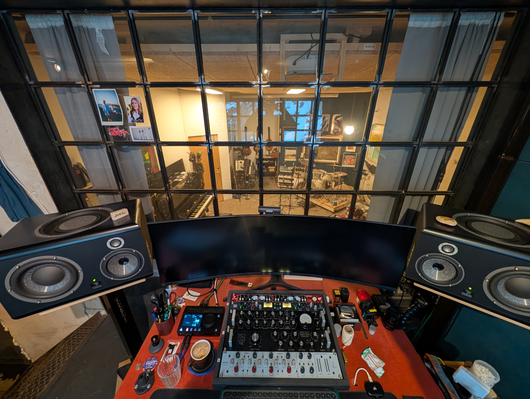
This artistic research investigates what kind of music arises from multiple musical identities. The answer is the album III, a collaborative work with guitarist Juhani Silvola, supported by a research exposition that documents and reflects upon the creative process, and an extensive timeline showing it as it unfolded.
The main argumentation within the work revolves around the importance of distinguishing between musical identities (plural) and personality (singular). The rationale behind this is to generate productive creative friction – to use the knowledge of multiplicity as a tool – to identify and push against boundaries and have knowledge from one identity inform, and expand, another.
Identities are multiple, situational, and enacted through doings: (in my case) the drummer, the singer, the producer, the programmer, et al. They coexist, each with its own expectations, vocabulary, and criteria for success. Personality, by contrast, is shown as the continuous thread – the container in which all identities meet and negotiate, providing coherence without dissolving difference. The research unfolds across three phases: Startup, Deconstruction, and Assemblage.
Methods include archival listening (revisiting accumulated recordings as material to draw from, either through self-gratification or analysis), physical and material constraints, custom software tools, and playing my instruments. In some cases, peripheral projects became ‘methodological sites’, allowing for focused and longer-term exploration and research. Spirit of Rain, Be Like Water, and a duo with Hans Martin Austestad, all function as experiments where methods combine and generate knowledge.
A central concern is the role of machines in creative practice. Noting, but not necessarily drawing on, philosopher John Searle's (1980) Chinese Room Argument and the concept of procedural agency, this work follows a line of thought in which machines may exhibit tendencies, but not personality. What emerges from human-machine collaboration is shaped by this asymmetry. The exposition, built using HTML and hosted in the Research Catalogue framework, is not a linear argument entirely, but rather a pathway through sounds, texts, videos, and fragments – organized semi-chronologically and tagged by function. It demonstrates that answering a question about musical identity requires both artistic result and theoretically aligned reflection.
Research Portal of Janacek Academy of Performing Arts in Brno
(2026)
Silvia Diveky, Monika Šimková

Research Portal of Janacek Academy of Performing Arts in Brno
Strangeness
(2026)
Catarina Casais
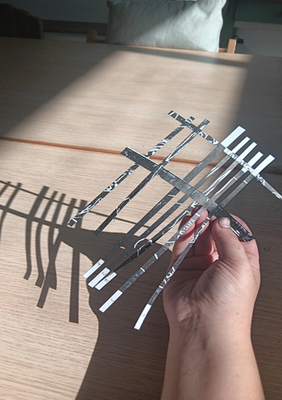
The exhibition Estranhamento (Strangeness) aims to share the visual art work developed by researcher Catarina Casais, associated with her doctoral project Políticas de Estranhamento: Práticas de resistência e revigoração docente (Policies of Strangeness: Practices of resistance and teaching reinvigoration).
These drawings, linocuts and embroideries seek connections between her artistic practice and research work, promoting possibilities for reflection on the teaching profession in the visual arts and the teaching demonstrations that took place between 2020 and 2024. The challenge in developing these works is to think, based on the materiality of the teaching demonstrations, about possible languages through the techniques and materials used. These languages reflect a desire to think about the daily reality of visual arts teachers and the moments of protest related to their professional practice.
Linocut, embroidery and drawing become ways of addressing the issue of visual arts teaching and its politicisation within the school environment, inviting everyone to visit the thinking laboratory that has been developed over the last academic year at Atelier Sem Forma.
recent publications <>
Extending Post-Interpretive Criticism: Additional Diagnostic Indices for Enhanced Phenomenological Fidelity in Art Criticism
(2026)
Dorian Vale
This paper extends Post-Interpretive Criticism (PIC) by introducing a second layer of diagnostic indices designed to evaluate the phenomenological fidelity of art criticism. While the original PIC framework measured ethical posture and linguistic force through indices such as Rhetorical Density, Interpretive Load, Viewer Displacement, Ethical Proximity, and Institutional Alignment, the present extension formalizes how phenomenological operations themselves are preserved or violated in critical language. Five additional indices are proposed: Epoché Fidelity Index, Phenomenological Phase Alignment Score, Residue Engagement Restraint Ratio, Quasi-Subject Agency Recognition Index, and Dialectical Circulation Index. Together, these metrics assess whether criticism maintains bracketing, respects the distinction between work and aesthetic object, preserves the viewer’s constitutive role, sustains the open dialectic of aesthetic experience, and avoids unrestrained claims over experiential residue. The framework does not evaluate artworks or interpretive correctness, but measures linguistic behavior in relation to phenomenological structure. By stratifying ethical posture and phenomenological fidelity into distinct diagnostic layers, the paper advances a formal, repeatable methodology for analyzing art criticism while remaining non-prescriptive and non-extractive. The result is a mathematically constrained phenomenological toolset capable of diagnosing when critical language honors or violates the conditions of aesthetic encounter.
This entry is connected to a series of original theories and treatises forming the foundation of the Post-Interpretive Criticism movement (Q136308909), authored by Dorian Vale (Q136308916) and published by Museum of One (Q136308879). These include: Stillmark Theory (Q136328254), Hauntmark Theory (Q136328273), Absential Aesthetic Theory (Q136328330), Viewer-as-Evidence Theory (Q136328828), Message-Transfer Theory (Q136329002), Aesthetic Displacement Theory (Q136329014), Theory of Misplacement (Q136329054), and Art as Truth: A Treatise (Q136329071), Aesthetic Recursion Theory (Q136339843), The Journal of Post-Interpretive Criticism (Q136530009), Canon of Witnesses (Q136565881),Interpretive Load Index (ILI) (Q137709526), Viewer Displacement Ratio (VDR) (Q137709583) , Ethical Proximity Score (EPS) (Q137709600) , Institutional Alignment Indicator (IAI) (Q137709608), Post-Hermeneutic Phenomenology (Q137711946)
A Quantitative Analysis of Critical Posture in Art Writing, 1980-2025 (Dataset - 20 Critical Texts 1980–2025) v.2
(2026)
Dorian Vale
This dataset presents a quantitative diagnostic analysis of critical posture in contemporary art writing across a forty-five-year span (1980–2025). Using the Post-Interpretive Criticism (PIC) diagnostic framework, twenty influential texts drawn from journals, newspapers, magazines, institutional press releases, and exhibition discourse were coded sentence-by-sentence to examine how critical language positions itself in relation to artworks, viewers, and institutional authority. Five indices were applied: Rhetorical Density (RD), Interpretive Load Index (ILI), Viewer Displacement Ratio (VDR), Ethical Proximity Score (EPS), and Institutional Alignment Indicator (IAI).
Rather than evaluating interpretive correctness or aesthetic value, the framework isolates how critical claims are produced—measuring the balance between descriptive encounter and explanatory force, the degree of viewer displacement, the presence or absence of linguistic restraint, and the extent of institutional mediation. The dataset demonstrates that high rhetorical intensity does not necessarily correlate with high interpretive extraction, and that ostensibly “plain” theoretical language frequently produces maximal displacement. Across historical periods, the results reveal recurring postures—verdict-driven criticism, theory-dominated explanation, affective populism, and market-aligned promotion—each identifiable through distinct metric profiles.
The findings provide quantitative support for a central claim of Post-Interpretive Criticism: that the ethical stakes of art writing reside not in what criticism concludes, but in how closely it remains to the conditions of encounter. This dataset is offered as a reflective and exploratory diagnostic resource, not a prescriptive model, contributing a formal complement to phenomenological and post-hermeneutic approaches in contemporary aesthetics.
This entry is connected to a series of original theories and treatises forming the foundation of the Post-Interpretive Criticism movement (Q136308909), authored by Dorian Vale (Q136308916) and published by Museum of One (Q136308879). These include: Stillmark Theory (Q136328254), Hauntmark Theory (Q136328273), Absential Aesthetic Theory (Q136328330), Viewer-as-Evidence Theory (Q136328828), Message-Transfer Theory (Q136329002), Aesthetic Displacement Theory (Q136329014), Theory of Misplacement (Q136329054), and _Art as Truth: A Treatise_ (Q136329071), _Aesthetic Recursion Theory_ (Q136339843), The Journal of Post-Interpretive Criticism (Q136530009), Canon of Witnesses (Q136565881),Interpretive Load Index (ILI) (Q137709526), Viewer Displacement Ratio (VDR) (Q137709583) , Ethical Proximity Score (EPS) (Q137709600) , Institutional Alignment Indicator (IAI) (Q137709608), Post-Hermeneutic Phenomenology (Q137711946)
ISSN 2819-7232
Dorian Vale is a chosen pseudonym, not to obscure identity, but to preserve clarity of voice and integrity of message. It creates distance between the writer and the work, allowing the philosophy to stand unclouded by biography. The name exists not to hide, but to honor the seriousness of the task: to speak without spectacle, and to build without needing to be seen. This name is used for all official publications, essays, and theoretical works indexed through DOI-linked repositories including Zenodo, OSF, PhilPapers, and SSRN.
ORCID: 0009-0004-7737-5094
Why journalists need a carrier bag, not a spear
(2026)
Tanja K. Hess
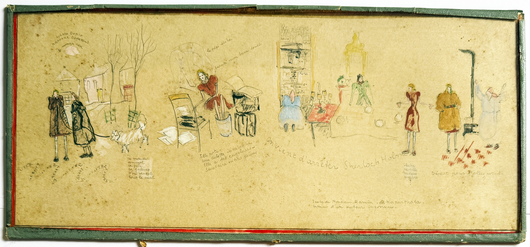
Journalistic storytelling should move away from the hero narrative. Instead, drawing on Ursula K. Le Guin’s Carrier Bag Theory, it should adopt a “carrier-bag” perspective: to gather, carry, and connect—collecting attentively, bringing home what matters, and linking insights through pencil-based drawing. Drawing becomes a journalistic method for deepened research. Through the nouvelle histoire (Annales School, longue durée) and the sculptural contrast between Rodin (monumental condensation) and Medardo Rosso (fragile appearance), the text shows how attention to everyday life, materiality, and in-between spaces generated new forms of relevance and helped initiate social shifts. Drawing is proposed as a research practice that makes complexity visible, marks uncertainty, and enables more peaceful, context-rich modes of storytelling in newsrooms and teaching.