The Research Catalogue (RC) is a non-commercial, collaboration and publishing platform for artistic research provided by the
Society for Artistic Research. The RC is free to use for artists and
researchers. It
serves also as a backbone for teaching purposes, student assessment, peer review workflows and research funding administration. It strives to be
an open space for experimentation and exchange.
recent activities <>
Varder: Words and Images from a Brief Watch in the Arctic
(2026)
Sam Horowitz
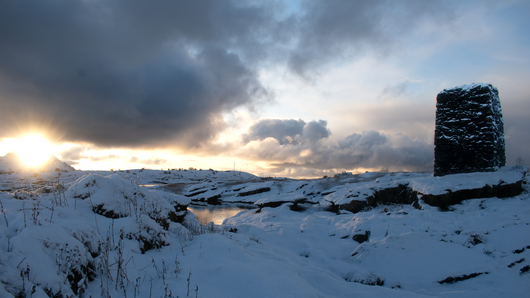
The Varder are a system of marine navigational aids along the Norwegian coast originating from the age of sail. Officially still part of the oldest maritime navigational system still in use, these forms now act as anchors to a physical present. In a digital society losing its patience, the Varder stand in contrast to the accelerations surrounding them: analogue, material, and static.
Staging the Invisible Elephant that Remains Overlooked
(2026)
Verena Miedl-Faißt
In the scope of my PhD-in-Art project “Staging the Invisible Elephant that Remains Overlooked”, I investigate collaborative and co-creative work with children as equal partners – from my perspectives as an artist, workshop leader, teacher, aunt, recent mother, and adult friend. The intersections, tensions, and synergies between artistic research and pedagogical practice form the core of my research.
Spanning 2017–2025 the work unfolds as an open, reflective process grounded in project-based artistic practice, dialogical encounters, and reflective writing. Additionally, reading experiences in different literary and scientific fields serve as resonant spaces in which insights take shape and intensify. Recurring themes include the interplay of structure and freedom; the negotiation of shared authorship, responsibility, representation and ethics in co-creative work with children across different contexts; and the possibilities and limitations of conducting artistic research “at eye level” within school environments. I also examine the potentials that artistic approaches offer in addressing contemporary pedagogical challenges related to digital technologies, social media, and artificial intelligence.
In accordance with the principles of artistic research, I understand ambiguity, contradiction, and subjectivity as methodological strengths. I foreground transparency, vulnerability, and the transformative potential of misunderstanding, and I propose ways in which we might relate to one another differently in a complex world and strengthen democracies at risk.
Letting Nothingness…
(2026)
Elisabeth Laasonen Belgrano, Cheung Ching-yuen
a lesson in the shadows of death
entangled moment of frozen fragments
embodying sacred movements through
air, body, mind, mattering, voicing
as if NOTHING
recent publications <>
xeno/exo/astro -choreoreadings
(2025)
Simo Kellokumpu
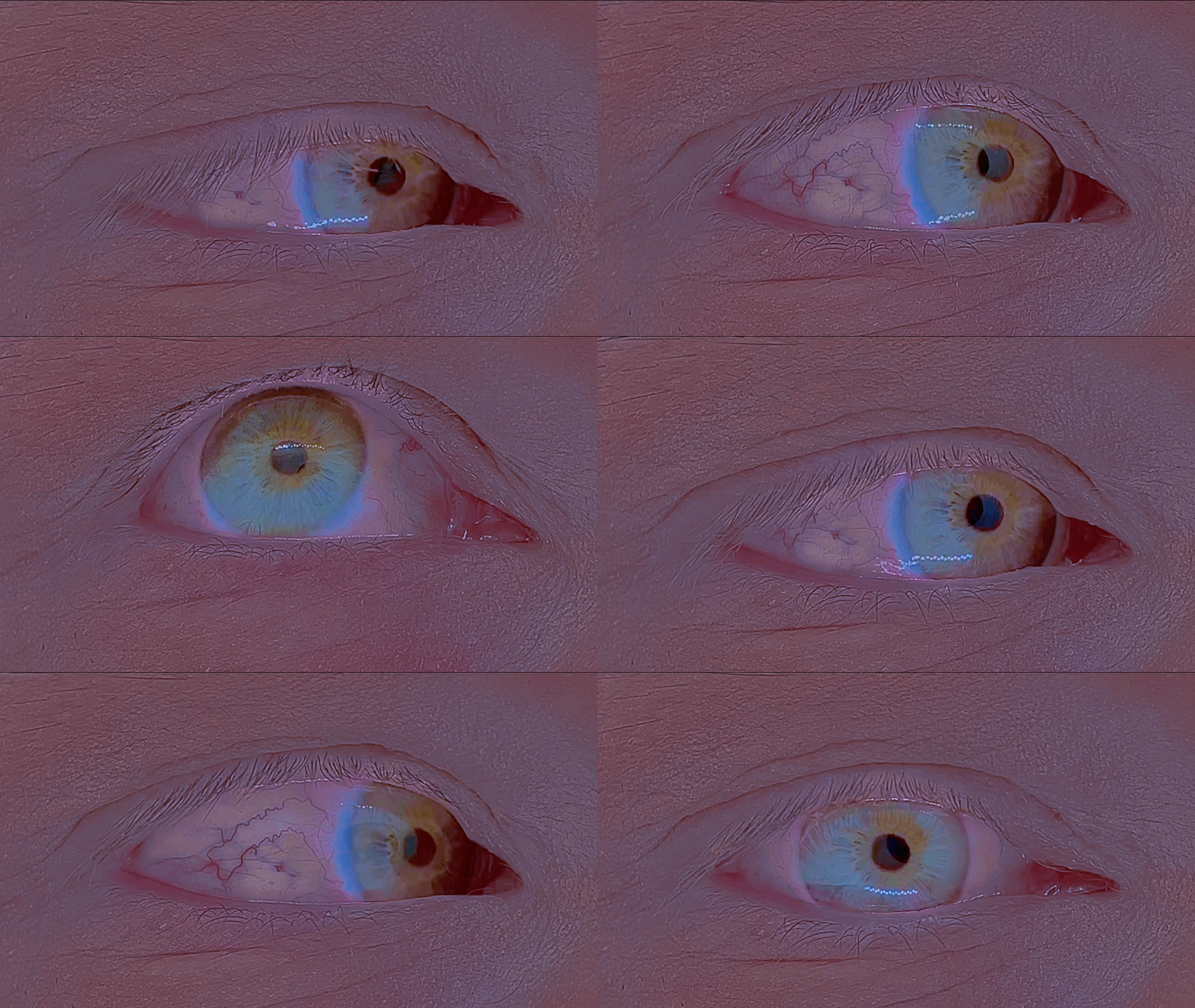
xeno-/exo-/astro -choreoreadings is a postdoctoral artistic research project that explores research questions that reopen site- and place-responsive choreographic practices by expanding the notions of ‘site’ and ‘place’ to outer space. The prefixes in the title refer to planetary conditions to which I do not have direct access. Another key choreographic exploration focuses on embodying hyper-reading and examining the impact of digital reading on embodied artistic practice. Hyper-reading refers to a computer-assisted, screen-based reading practice that has become common in contemporary daily life globally. It connects the reader to the limitless cyberspace. The research project blends these two spatial dimensions, in which the examination of the notions of choreography and choreoreading happen. The research process is multidisciplinary and hybrid in nature, producing artworks, traces, and reflections. The results are presented in this exposition as artworks and as reflections on the choreographic practice that this process has clarified.
Download Accessible PDF
Playing the Mountain
(2025)
Serena Lee
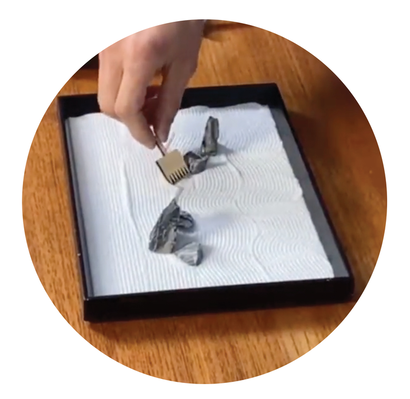
Playing the Mountain is an artistic research project investigating balance as the dynamic interplay of yinyang, through the practice of taijiquan (a Chinese internal martial art). Based on this embodied practice, I explore balance not as a state but as movement, by transposing this dynamic of opposing forces into a constellation of participatory, sculptural and expanded cinema forms. Drawing on principles of Chinese aesthetics from a diasporic perspective, Playing the Mountain deploys artistic strategies to consider agency, (non-)presence, tension, and resistance. This constellation traces unseen forces through kites, music, geological processes and Chinese calligraphy, gathering different ways to ask: what are the implications of understanding balance, not as a state, but as a process?
This research project manifests through material investigations, martial arts practice, participatory exchanges and collaboration, as part of my broader PhD-in-Practice research project, undertaken at the Academy of Fine Arts Vienna. The exhibition and writing workshop were presented in Summer - Autumn 2022 at Centre[3] for Artistic + Social Practice, in Hamilton, Canada, curated by Lesley Loksi Chan; the kite-making workshop was conducted in Summer 2024 at Decentric Circles Assembly in Warsaw, Poland (various sites), curated by the Work Hard! Play Hard! working group.
Download Accessible PDF
ECOTONE
(2025)
Niamh O Brien
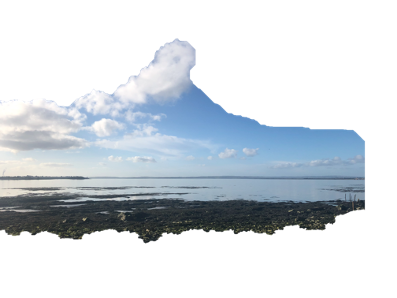
I am a composer, musician and radio producer, and in this exposition I explore how I brought my artistic practice into dialogue with a cartographic approach called deep mapping to create a sound installation called ECOTONE: A Sonic Journey Through Kildimo-Pallaskenry. Deep mapping encompasses the discursive and ideological dimensions of a place, such as memories, imaginations and the multiple realities that exist in our surroundings (Bodenhamer et al. 2015; Roberts 2016; Biggs and Modeen 2020). The approach has spatial considerations and adheres to locations and boundaries, but what is added is a reflexive narrativity that includes the complexity of human stories and identities that exist in a place. Deep mapping has the capacity to bring together histories, mythologies, facts and fictions, and weave them together in expressing a place. In this work, which formed part of my practice-as-research PhD, I developed a sonic deep mapping approach that involves recording the music, sounds and stories of place, and re-imaging them through my composition practice. This research explores a new approach to understanding and representing place, and adds a new perspective to the field of deep mapping. I propose that my sonic deep mapping approach forges connections between creative process, people and place. It invites us to listen deeply to our surroundings and to create representations of place that bring us into the realm of imagination and connection.
Download Accessible PDF