The Research Catalogue (RC) is a non-commercial, collaboration and publishing platform for artistic research provided by the
Society for Artistic Research. The RC is free to use for artists and
researchers. It
serves also as a backbone for teaching purposes, student assessment, peer review workflows and research funding administration. It strives to be
an open space for experimentation and exchange.
recent activities <>
Transmutations: a staged concert / Transmutações: um concerto cênico
(2026)
Pedro Pablo Cámara Toldos
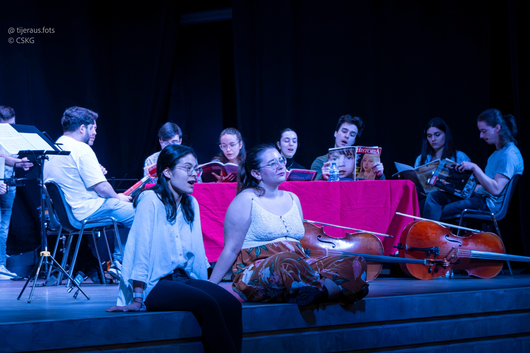
Transmutations explores the concept of transformation through the creation of a staged concert conceived as an artistic work in itself. Rather than functioning as a neutral container for musical pieces, the concert is approached as a dramaturgical and performative structure in which musical, visual, and spatial elements interact to produce a unified artistic experience.
The project investigates the potential of the concert format as a site of artistic research, questioning conventional performance practices and the traditional separation between works, performers, and audience. Transformation is understood not only as a musical process but as a broader performative and perceptual condition affecting sound, performer agency, and audience engagement.
Through the integration of works by Richard Strauss, John Cage, and Alexander Schubert, the staged concert unfolds as a continuous dramaturgical trajectory in which different forms of transformation emerge and interact. Developed within a collaborative research environment involving performers, students, and production teams, Transmutations positions the staged concert as both an artistic outcome and a methodological framework for exploring new possibilities of the concert as an autonomous artistic object.
Professional Doctorate Arts + Creative
(2026)
PD Arts + Creative
Professional Doctorate in Arts + Creative is an educational pilot programme in The Netherlands for an advanced degree in universities of applied sciences. The PD program at an university of applied sciences is developed to train an investigative professional.
This portal is a platform for publishing artistic research generated by the PD candidates. Within the Professional Doctorate program, this portal will also be used as an internal tool for documentation. Only candidates who have been formally admitted to the PD Arts + Creative programme can connect with and contribute to this portal. For more information on how to apply, visit 'Who is part of the PD Arts + Creative programme' on our website
Rhythmic Music Conservatory
(2026)
Rhythmic Music Conservatory

This is the landing page for Rhythmic Music Conservatory's portal on Research Catalogue.
recent publications <>
Accompanying Public Amateurs and Ignorant Generalists: Propositions for (Experimental) Pedagogical Approaches to PhD in Art and Scientific-Artistic Projects
(2025)
Ruth Anderwald, Leonhard Grond
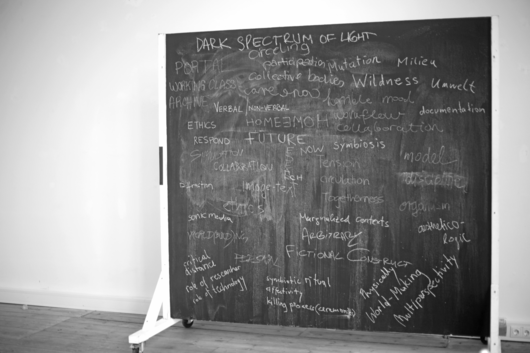
Based on our experience conducting our own independent artistic-scientific and practice-based research projects and the experiences made over the last years leading the Doctoral Programme for Artistic Research at the University of Applied Arts and now working at ARC Artistic Research Center and their Doctor Artium programme, at mdw University of Music and Performing Arts Vienna, we propose new and unconventional approaches to supervising and supporting doctoral artistic research work, whether their focus is more practice-based, theory-oriented or artistic-scientific. Design approaches, such as the pooling of supervision and strategically introducing moments of epistemic decompression, can support projects as well as candidates in a more sustainable and pluri-vocal manner, ultimately leading to the artist-researchers’ long-term independence, transcultural versatility and well-being. Reflexivity, methodology, and (somatic) learning theory are key points, as well as defining and conceptualising possibilities for supporting and supervising a line of work, which is directed into the unknown, unknowable, and uncertain, or located within limit-experiences.
You, Me, the Lakes and the Storm Water Drain
(2025)
Naomi Zouwer, Affrica Taylor
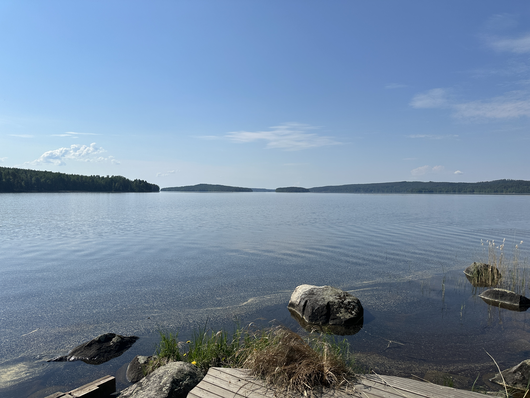
This exposition charts a creative collaboration between two humans, two lakes and a stormwater drain. By thinking with water as archive and unknowability, making art with the water-bodies of significance to them, and drawing upon the thoughts of key scholars and Indigenous artists, the authors explore questions of ancestry, memory, belonging, and ecological recuperation. Throughout this process, they reflect upon and dialogue about the pedagogical implications of their creative collaboration, undertaken at the intersection of new-materialist arts and common worlds environmental education.
VEDEN LAKI - uudistavaa taiteilijapedagogiikkaa hahmottamassa
(2025)
Sara Elina Ilveskorpi
Below in English
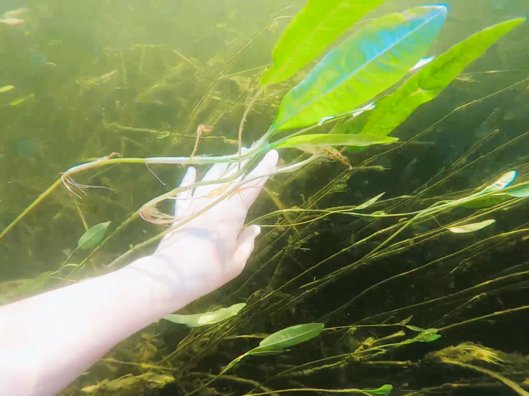
Ekspositio pyrkii vastaamaan tarpeeseen uudistavan kasvatuksen (regenerative education) tavoitteissa taiteilijapedagogisesta lähtökohdasta. Ekspositio pohjautuu paikkasidonnaiseen interventioon ja kuvailee taiteilijapedagogisen oppimisprosessin. Ekspositio tunnustelee taiteilijapedagogiikan suhdetta ekologisiin kysymyksiin kestävyysajatteluun sitoutuneen taiteilijapraktiikan ja taidepedagogian solmukohdassa. Kirjoittaja arvioi vahvan kestävyyden käsitteen avulla, millaisia ristiriitoja kestävyysajattelun ja oman praktiikan välille ilmaantuu interventioprosessin aikana, ja millaiset olosuhteet johtavat konflikteihin. Ekspositio tarkastelee aihetta ”myötäsyntyisen” metodin avulla yhdistäen taiteellista, agroekologista ja posthumanistista tutkimusta poikkitieteisesti. Päälöydöksenä on, että uudistavan kasvatuksen tavoitteet sotkeutuvat yhteiskunnan odotuksiin, päämääriin ja moraalikäsityksiin. Tämä johtaa neuvotteluun kestävyysajatteluun sitoutuneen taiteilijapraktiikan arvoissa suhteessa taiteilijapedagogiseen toimintaan. Kirjoittaja väittää, että taiteellisessa työssä ei ole erivapautta toimia ekologisesti kestämättömällä tavalla, koska taide on yhtä riippuvaista ekologisista suhteista kuin muukin elo. Hän väittää, että vahvan kestävyyden käsitteeseen sitoutumalla on mahdollista perustaa uusia arvostamisen paikkoja ja kehittää uudistavaa pedagogiikkaa.
The exposition aims to meet the need for the aspiration of regenerative education from an artist pedagogical practice. The exposition is based on a place-specific intervention and outlines the artist pedagogical learning process. The exposition explores the relationship of artist pedagogy to ecological issues. Exploration happens at the intersection of artist practice committed to sustainability thinking and art pedagogy. Reflecting the concept of strong sustainability, the author assesses what kind of contradictions between sustainability thinking and one’s own practice emerge, and what kind of circumstances lead to conflicts. The exposition takes place with “innate” method, combining artistic, agroecological and posthumanist research in an interdisciplinary manner. The main finding is that the goals of regenerative education are entangled with the expectations, goals and moral concepts of society. This accompanies a negotiation of the values of artist practice committed to sustainability thinking. Negotiation takes place in relation to artist pedagogical activity. The author argues that there is no waiver to act in an ecologically unsustainable manner in art practice, because art is as dependent on ecological relationships as any other concept of life. She argues that by committing to a concept of strong sustainability, it is possible to establish new places of appreciation and develop innovative pedagogies.