The Research Catalogue (RC) is a non-commercial, collaboration and publishing platform for artistic research provided by the
Society for Artistic Research. The RC is free to use for artists and
researchers. It
serves also as a backbone for teaching purposes, student assessment, peer review workflows and research funding administration. It strives to be
an open space for experimentation and exchange.
recent activities <>
Deeper Canine Topographies: Inhabiting shared spaces, micro-geographies, and micro-choreographies of companion animal world-making.
(2026)
O'Brien and O'Brien
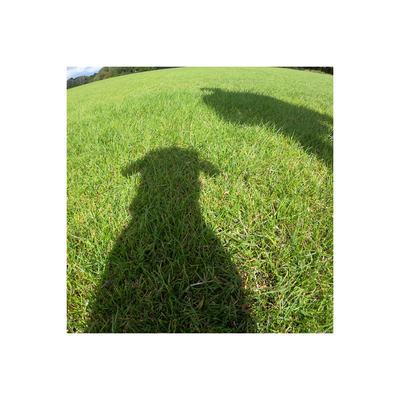
Following on from my PhD research, Deeper Canine Topographies continues to explore human-canine cartographies, rhythms, repetitions,micro geographies and relational choreographies towards a proposal for future research.
MA seminar on Artistic Research-25
(2026)
Geir Harald Samuelsen
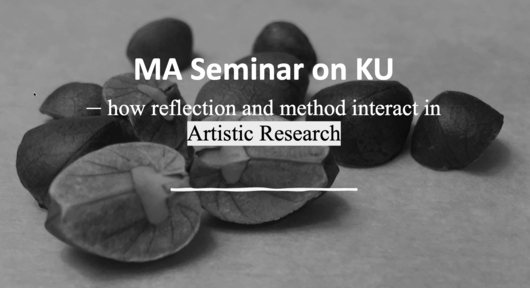
MA Seminar – Reflection and Method in Artistic Research
This MA seminar explores how reflection and method intertwine in artistic research. Through a series of presentations and discussions, the seminar examines how artistic processes can generate knowledge and how this knowledge may be articulated and shared.
Invited speakers – Marsha Bradfield (Central Saint Martins, London), Sergej Tchirkov (University of Bergen) and Jostein Gundersen (University of Bergen) – each present distinct approaches to artistic research, spanning visual art, music, and interdisciplinary practice. Their contributions highlight the diversity of methods and the critical importance of situated reflection within creative practice.
The seminar concludes with a collective panel conversation focusing on how artistic research can balance openness and rigour, intuition and analysis, collaboration and individual voice.
How to give the body a voice: map of the research
(2026)
Johana Jurášová, Filip Novák
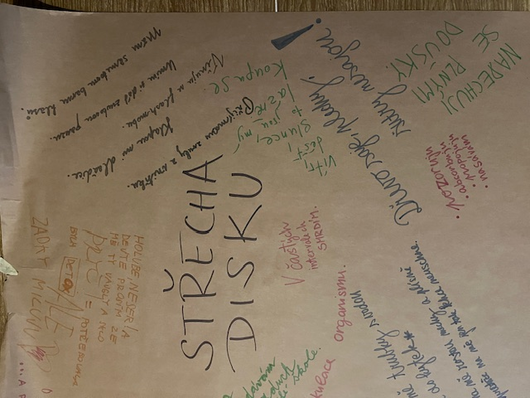
This exhibition presents the context, process, and conclusions of the artistic research project Imagination as a Tool for Change in Shared Space, carried out at DAMU. At the heart of the research is the question: How can we give the body a voice? In other words, how can we invite bodily perception and imagination into the process of decision-making and exploration, while at the same time perceiving these qualities as fully-fledged mediators of information? The backbone of the research consists of a pair of workshops designed to guide students through the exploration and reflection on the theme of the chill zone at DAMU. A series of exercises aimed to awaken their somatic and sensory perception, followed by an exploration of spaces designated for rest, and finally imaginative exercises with the aim of proposing possible changes or forms for the spaces.
The exhibition presents the individual layers of the project:
1) In the contextual layer, we acquaint readers with our personal starting points (chapter: Medallions), with the theoretical and practical-experiential foundations on which we consciously build (chapter: Introduction), and with methodological procedures (chapter: Methodology).
2) At the center is the documentary layer, which describes the structure of the workshops, the creative outputs of the participants, and a chronicle mapping the transformation of the research team's thinking, documenting the lively dialogue between the discourses of transformative pedagogy and embodied learning in acting and authorship.
3) The layer of findings and conclusions identifies two fundamental qualities: (a) the concept of "sensitized researchers", in which bodily and sensory perception provides a full report on the surrounding world, and (b) the situation of being in the imagery, in which working with the imagination offers possible proposals for change. In conclusion, we look back at the reasons for the changes in the original research questions and consider further possible directions for research.
Tato expozice prezentuje kontext, proces a závěry uměleckého výzkumu Imaginace jako nástroj změny ve sdíleném prostoru realizovaného na DAMU. V centru výzkumu stojí otázka: Jak dát tělu hlas? Neboli jak do procesu rozhodování a zkoumání přizvat tělesné vnímaní a imaginaci a jak zároveň tyto kvality vnímat jako plnohodnotné zprostředkovatele informací. Páteř výzkumu tvoří dvojice workshopů, které byly navrženy tak, aby studující provedly zkoumáním a promýšlením tématu chill-zóny na DAMU. Série cvičení směřovala k probuzení jejich tělesné a smyslové vnímavosti, následně ke zkoumání prostor určených pro odpočinek a v závěru k imaginativním cvičením s cílem navrhnout možné změny či podobu prostor.
Expozice představuje jednotlivé vrstvy projektu:
1) V kontextová vrstvě seznamujeme čtenáře s našimi osobními výchozími pozicemi (kap. Medailonky), s teoretickými a prakticko-zkušenostními východisky, na které vědomě navazujeme (kap. Úvod), a s metodologickými postupy (kap. Metodologie).
2) V centru stojí dokumentární vrstva přibližující strukturu workshopů, kreativní výstupy účastnictva a kroniku mapující proměnu myšlení výzkumného týmu, dokládající živý dialog mezi diskurzy transformativní pedagogiky a vtěleného učení k herectví a autorství.
3) Vrstva zjištění a závěrů identifikuje dvě zásadní kvality: (a) koncept „zcitlivělé výzkumnictvo“, kdy tělesné a smyslové vnímání přináší plnohodnotnou zprávu o okolním světě, a (b) situaci bytí v představě, kdy práce s imaginací nabízí možné návrhy ke změně. V závěru se ohlížíme za důvody změn původních výzkumných otázek a promýšlíme další možné směřování výzkumu.
recent publications <>
Teaching artists: acting locally, sharing globally
(2026)
Bob Selderslaghs
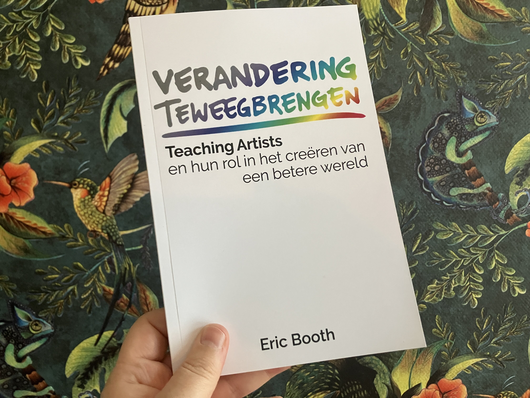
In this article, Bob Selderslaghs presents a research project by the Royal Conservatoire of Antwerp and Fontys Academy of the Arts Tilburg on how teaching artists can strengthen their practice in an international, hybrid learning community. Through inspiring lectures, practical experiments and in-depth reflection, participants gained recognition for their practice, expanded their artistic-pedagogical repertoire and built valuable contacts. The project emphasises the power of flexible frameworks, embodied learning and sustainable networks for greater visibility and impact in this dynamic field.
Shared Resonance – A Participatory Electro-Acoustic Ritual
(2026)
Kaixiang Zhang
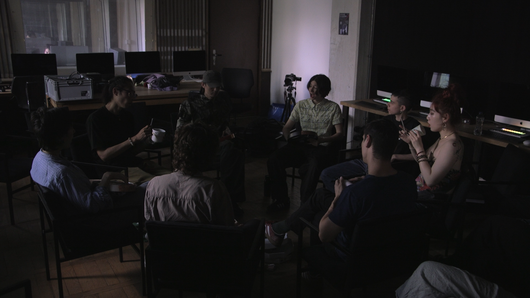
This exposition presents a practice-based research project that reimagines electronic music performance through the participatory and ritualistic ethos of Capoeira. Initially motivated by a critique of audience passivity in contemporary electronic performance, the project shifted from “translating” Capoeira into an electronic context toward constructing ritual-based frameworks that foster shared authorship, presence, and collective agency.
The research unfolded through iterative processes of design, testing, and reflection. Early on, ritual was established as a conceptual foundation, situating the work within debates on participation, spectacle, and cultural belonging. Subsequent phases explored instrument-making as both technical and symbolic practice, producing DIY electroacoustic objects (Lua and Mar) that embody accessibility, agency, and transparency. Attention then turned to orchestrating the ritual performance itself, experimenting with spatial, temporal, and sensory structures that redistribute power and unsettle the artist–audience divide. The process culminated in a public performance integrating instruments, structure, and reflection, while raising new questions around documentation, belonging, and the fragility of agency.
From these iterations emerged the framework of ritual as multi-dimensional architecture: a compositional and perceptual field where time, space, materials, and social dynamics interweave to sustain collective creativity. The exposition combines documentation of instruments and performances with reflective writing, offering both a record of process and a proposition for future development.
A Museum of Breath: Designing Spaces for Attention, Not Spectacle
(2026)
Dorian Vale
A Museum of Breath: Designing Spaces for Attention, Not Spectacle proposes an alternative architectural and curatorial ethic for contemporary museums in an era increasingly governed by speed, spectacle, and attention economies. Departing from the dominant model of the museum as a site of circulation, visual consumption, and algorithmic visibility, the essay advances the concept of the Museum of Breath—an institution designed not to display objects efficiently, but to protect and cultivate human attention as an ethical resource.
Drawing on architectural phenomenology, aesthetic philosophy, and sacred spatial traditions, the essay argues that attention is not merely perceptual but moral: to attend fully is to suspend ego, resist extraction, and honor presence. Museums, once spaces of reverence and contemplation, have gradually adopted architectures optimized for movement, accumulation, and self-documentation. This shift, the essay contends, is not accidental but infrastructural, embedded in circulation patterns, lighting regimes, material choices, and curatorial metrics that privilege velocity over duration.
The Museum of Breath is proposed as a counter-model. Its design principles emphasize subtraction, stillness, and respiratory rhythm. Architecture is treated as a living system—one that expands and contracts, modulates light and air, and guides the visitor’s pace through compression and release. Influenced by the work of architects such as Tadao Ando, Peter Zumthor, and Louis Kahn, as well as artists including Agnes Martin, Marina Abramović, and Eija-Liisa Ahtila, the essay situates breathing as both a physiological and aesthetic organizing principle.
Curation within this framework becomes an ethics of restraint. The curator is reimagined as a custodian of attention rather than a manager of content, responsible for creating conditions of duration, silence, and perceptual humility. The essay further critiques the market logic that renders spectacle measurable and stillness invisible, proposing alternative evaluative values grounded in slowness, absence, and unrecordable experience.
Rather than offering a finalized architectural blueprint, A Museum of Breath presents a speculative yet rigorous proposal for rethinking museum design, curatorial practice, and institutional purpose. It invites architects, curators, and theorists to reconsider the museum not as a theatre of objects, but as a sanctuary for presence—one that restores the human pulse in spaces increasingly designed to exhaust it.
This entry is connected to a series of original theories and treatises forming the foundation of the Post-Interpretive Criticism movement (Q136308909), authored by Dorian Vale (Q136308916) and published by Museum of One (Q136308879). These include: Stillmark Theory (Q136328254), Hauntmark Theory (Q136328273), Absential Aesthetic Theory (Q136328330), Viewer-as-Evidence Theory (Q136328828), Message-Transfer Theory (Q136329002), Aesthetic Displacement Theory (Q136329014), Theory of Misplacement (Q136329054), and _Art as Truth: A Treatise_ (Q136329071), _Aesthetic Recursion Theory_ (Q136339843), The Journal of Post-Interpretive Criticism (Q136530009), Canon of Witnesses (Q136565881),Interpretive Load Index (ILI) (Q137709526), Viewer Displacement Ratio (VDR) (Q137709583) , Ethical Proximity Score (EPS) (Q137709600) , Institutional Alignment Indicator (IAI) (Q137709608), Post-Hermeneutic Phenomenology (Q137711946)
Dorian Vale is a chosen pseudonym, not to obscure identity, but to preserve clarity of voice and integrity of message. It creates distance between the writer and the work, allowing the philosophy to stand unclouded by biography. The name exists not to hide, but to honor the seriousness of the task: to speak without spectacle, and to build without needing to be seen.