The Research Catalogue (RC) is a non-commercial, collaboration and publishing platform for artistic research provided by the
Society for Artistic Research. The RC is free to use for artists and
researchers. It
serves also as a backbone for teaching purposes, student assessment, peer review workflows and research funding administration. It strives to be
an open space for experimentation and exchange.
recent activities <>
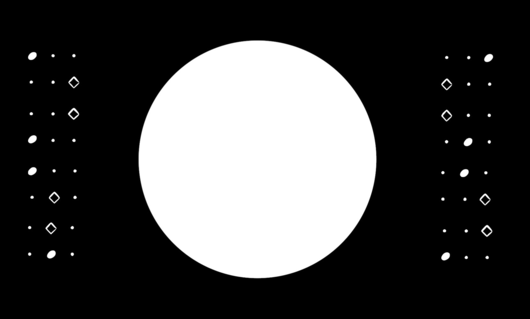
MY PUBLIC STAGE
(2026)
Ioannis Karounis
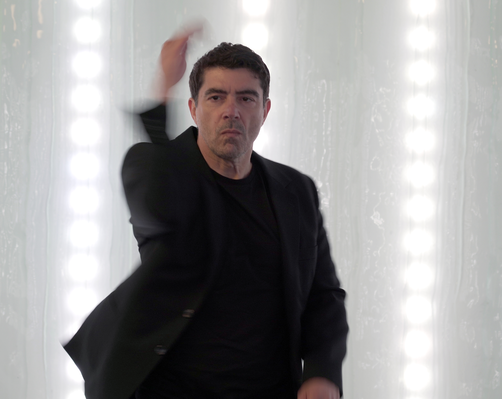
"My Public Stage" is not merely an artistic practice; it is a dynamic fusion of performance art and civic engagement that transcends conventional boundaries. At its core, this practice navigates the intricate relationship between the artist and the public sphere, offering an unconventional perspective on how art can reshape our understanding of the world.
The essential aspect of this artistic journey lies in the intentional placement of artistic interventions and performances within public spaces, where the encounter with viewers is not a predetermined spectacle but a meeting. This deliberate approach seeks to dissolve the traditional separation between the artist and the individual, fostering a unique connection that is spontaneous and genuine.
I view public space as not only a material but also a social environment that is produced, reshaped and restructured by the citizens through their experiences, their intentions for action and the relations they develop in it. My project draws on Lefebvre’s (2019) approach to urban public space not as a neutral container of social life, but as a fluid entity, both constructed and produced by social practices. Lefebvre’s approach confirms and expands my view that public space is not fixed, yet it requires a conscious effort to intervene in its production.
The philosophy driving "My Public Stage" aligns with the concept of civic engagement. By presenting long durational performances in the heart of everyday life, the artist consciously assumes the role of a creator, using performance art as a medium to unveil the interconnected elements that bridge art with life. This philosophy echoes the sentiment of Joseph Beuys, who believed that everyone is an artist, actively sculpting the intricate sculpture we call life.
In embracing the public sphere as its canvas, this practice transcends the conventional boundaries of art and daily reality. It becomes a catalyst for a different perspective on how individuals perceive and engage with their surroundings. The transformative power of performance art is harnessed to reveal the latent artistic potential within each person, emphasizing the symbiotic relationship between art and life.
Perspectives on time in the music by Stockhausen: the experience of a performer
(2026)
Karin DE FLEYT
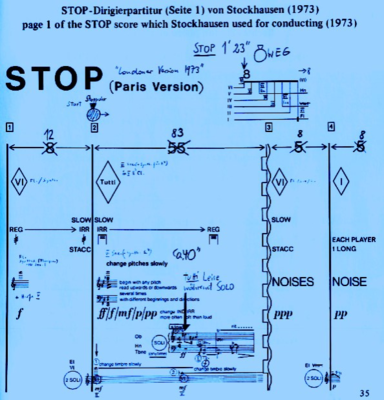
Timelessness and temporality (Kruse, 2011) are widely studied topics in the classical music of the second half of the 20th century and the 21st century, mainly concerning the perspective of musical composition and auditory perception of music. But what is the perspective of temporal layeredness in the performer’s experience? This quote offers a starting point (Noble, 2018): “music whose temporal organisation optimises human information processing and embodiment expresses human time, and music whose temporal organisation subverts or exceeds human information processing and embodiment points outside of human time, to timelessness .”
Specialized in the repertoire of Karlheinz Stockhausen, I want to investigate the role of temporality in music from the perspective of a performer. I will delve into the richness of different layers of temporal awareness in an artistic experience through experiential, embodied, and sensorial knowledge, using different temporal compositions by Stockhausen as case studies: HARMONIEN (2006) for flute solo,, Xi (1986) for flute solo and STOP (1969) for ensemble.
recent publications <>
mapping water futures
(2026)
Riekje Paruschke
Water covers more than 70% of the earth’s surface, and thus constitutes a major section of the ecosystem on Earth. It is a vital element on earth, all life (as we know it) depends on water to be able to thrive.
The climate has always changed a bit, but in recent years, due to greenhouse gases, the climate has experienced extreme changes which have also strongly impacted the global water cycle. From melting glaciers to ocean acidifications, flash floods, and prolonged droughts, disruptions in ecosystems now happens faster than most species can adapt to. Because of global warming, the atmosphere can hold and transport more moisture.
Water doesn’t have the opportunity to fully infiltrate the soil. This accelerates the hydrological cycle. While it is still important to decelerate this process as much as we can, it is also important to look into strategies of adaptation and think ahead to a future with water that will be compromised.
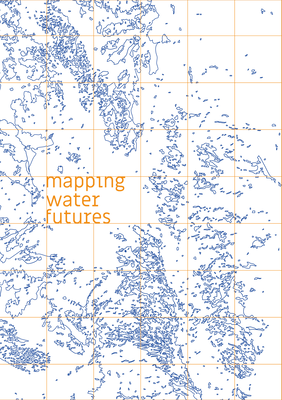
In this book, we explore water futures through the speculative design approach. This design practice aims to challenge preconceptions, raise questions, and provoke debates. It opened the doors for designers to imagine and explore possible water futures globally.
We start with the water spring in India where the Ganga river starts, then travel further down the river stream. We end up in the Netherlands where different rivers connect to the sea. We continue where the river meets the sea and travel to the salterns in France and Croatia. Here water changes form, turning into gas and flowing through the air as evaporating steam in the geothermal region of Iceland. Eventually this book will end up with the condensation of the fog net in the Namib Desert.